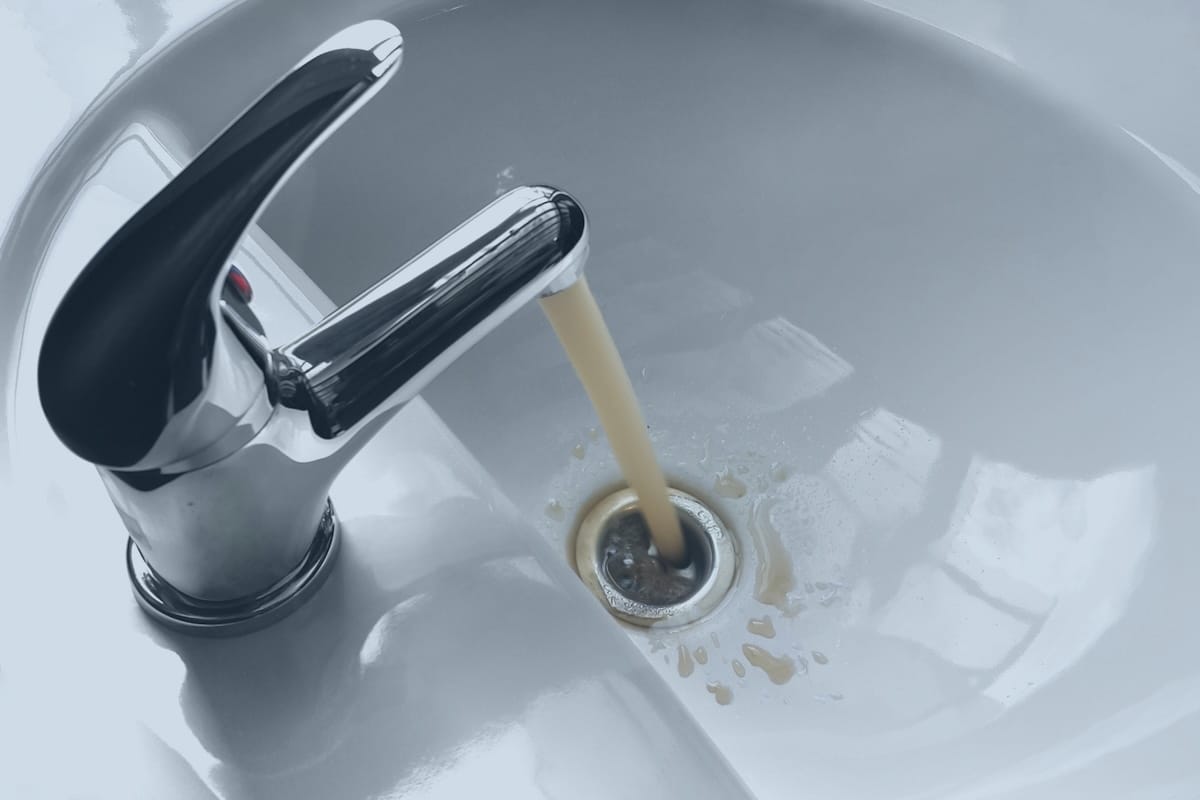
To get rid of brown well water, you first need to find out what is causing it, because the fix depends entirely on the cause.
Brown water usually comes from iron and manganese, rust, stirred-up sediment, tannins, or iron bacteria, and each one calls for a different solution.
Boggs Inspection Services tests well water for homeowners across the South Puget Sound, and the most common mistake we see is people buying a filter before they know what they are treating.
This guide walks through why your well water turned brown, whether it is safe, how to clear it up for good, and when it is time to test.
Why Is Your Well Water Brown?
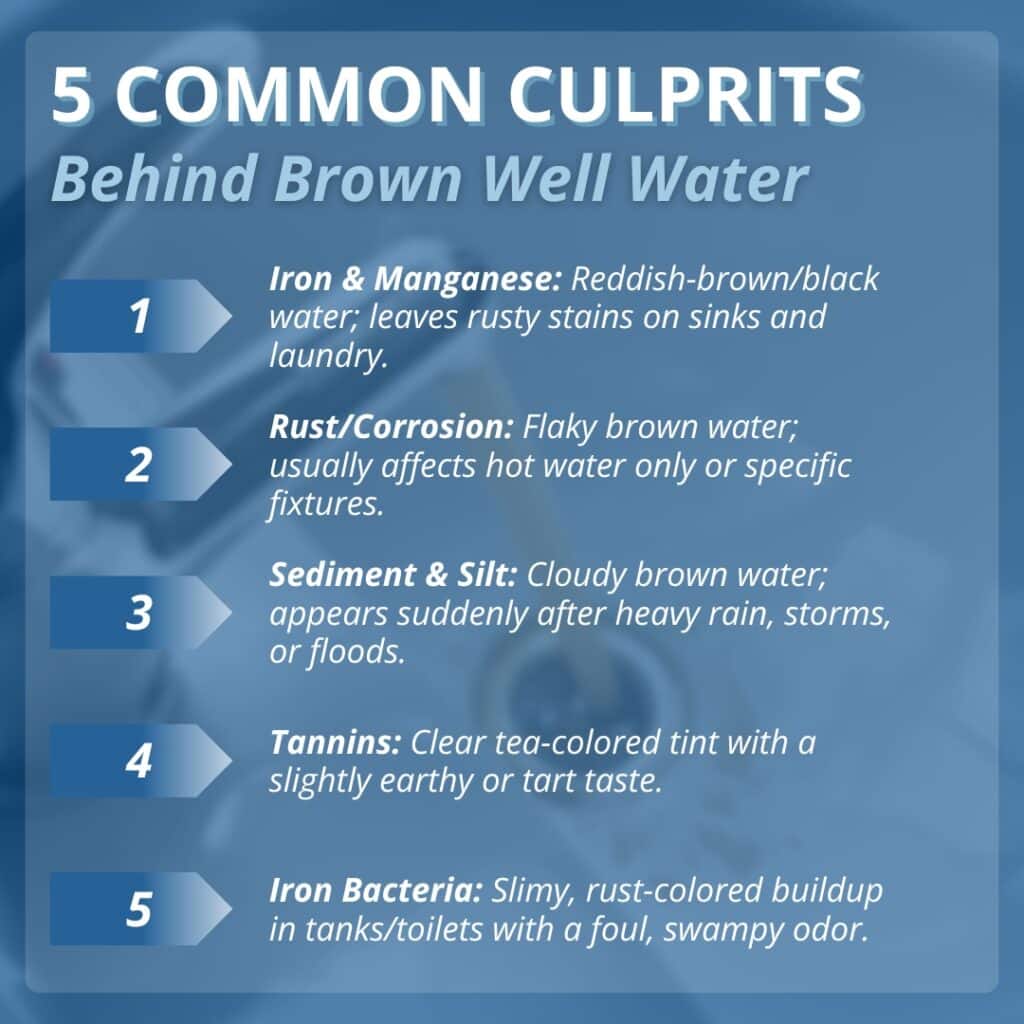
Well water turns brown when something dissolved or suspended in it changes the color, and there are five common culprits. Figuring out which one you have is the first step to fixing it.
Iron and manganese
Iron and manganese are the most common cause of brown well water. These minerals dissolve underground and then oxidize when they hit air or your plumbing, turning the water reddish-brown (iron) or brown-black (manganese).
At typical levels, they are an aesthetic problem, staining fixtures and laundry rather than posing an immediate danger.
The EPA sets secondary, cosmetic limits of 0.3 mg/L for iron and 0.05 mg/L for manganese, per its guidance on nuisance chemicals in drinking water.
Manganese does have a health advisory at higher concentrations, so it is worth testing rather than guessing.
Rust from pipes, casing, or the water heater
Aging steel well casing, galvanized pipes, or a corroding water heater can shed rust flakes that tint the water brown.
A telling clue: if only the hot water runs brown, the source is almost certainly your water heater or plumbing, not the well itself.
Sediment and silt (often after heavy rain)
Dirt, silt, and sand can get pulled into the water when a pump sits too low, cycles hard, or when heavy rain and snowmelt disturb the aquifer.
In wet Western Washington, this is a frequent trigger. Simple sediment is cosmetic, but brown water that shows up right after a storm or flooding is a red flag, because surface water working its way into the well can carry bacteria too.
Tannins from organic matter
Tannins come from decaying leaves and vegetation and give water a tea-colored, sometimes slightly tart character.
They are harmless to your health but signal that surface water is influencing your well.
Iron bacteria
Iron bacteria are living organisms that form a slimy, rust-colored sludge in the well and plumbing. They are not usually a direct health threat on their own, but they clog systems, worsen odor, and can shelter other bacteria.
Clearing them typically requires shock chlorination, sometimes more than once.
Is Brown Well Water Safe to Drink?
It depends on the cause, and you cannot tell safe from unsafe just by looking. Iron, manganese, rust, and tannins are usually aesthetic issues that stain and taste bad without making a healthy adult sick.
The dangerous scenario is brown water that appears suddenly, follows flooding or heavy rain, or comes with a sewage or chemical smell, because that can mean bacteria such as E. coli or coliform, or nitrates, have entered the well.
Because private wells are not regulated by the EPA, the responsibility for testing falls on you as the owner.
The CDC recommends testing your well for total coliform bacteria, E. coli, and nitrates whenever the water changes or after a flood, as outlined in its guidelines for testing well water.
Until you know the cause, use bottled water for drinking and cooking if the brown appeared suddenly or after a storm.
How to Get Rid of Brown Well Water
The right fix matches the cause, which is why testing comes first. Here is how the common causes map to solutions:
| Cause | How to confirm it | The fix |
|---|---|---|
| Sediment/silt | Clears after running the cold tap for a few minutes; worse after rain | Whole-house sediment filter; have the pump depth and cycling checked |
| Low iron/manganese | Water test shows iron or manganese near EPA limits | Water softener (ion exchange) |
| Higher iron/manganese | Water test shows elevated levels | Oxidizing iron filter (such as manganese greensand) or aeration plus filtration; reverse osmosis for drinking water |
| Tannins | Tea color, organic/tart taste, low iron on test | Activated carbon or a tannin (anion-exchange) filter |
| Iron bacteria | Slimy rust-colored buildup, odor | Shock chlorination, repeated as needed |
| Rust/corrosion | Brown mainly on hot water or specific fixtures | Inspect and replace corroded casing, pipes, or the water heater |
A quick DIY triage before you spend anything: run the cold tap for five to ten minutes. If the water clears, you are likely dealing with disturbed sediment.
If it stays brown, or if only the hot water is affected, you have narrowed the problem considerably. To understand how your system moves water in the first place, our guide on how a well works and its maintenance basics is a helpful companion.
Test Before You Treat: What an Inspection Tells You
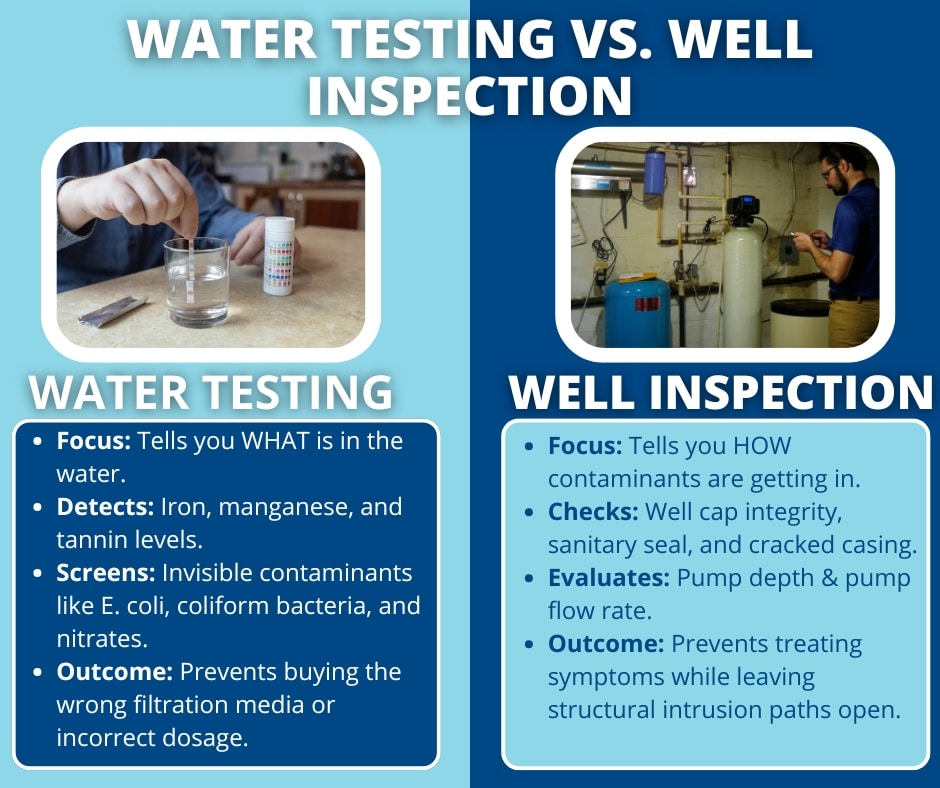
The smartest thing you can do with brown well water is test it before buying any treatment, because a filter cannot fix a structural problem.
A water softener will not help if the real issue is a cracked well cap letting surface water in, and an iron filter will not stop sediment from a pump set too deep.
A certified-lab water test tells you exactly what is in the water and at what levels, so you buy the right treatment instead of guessing.
A physical inspection of the well and water system adds the other half of the picture: the condition of the well cap and sanitary seal, casing integrity, how the pump is drawing and whether it is pulling sediment, and whether the wellhead is graded and set safely away from the septic system.
Boggs Inspection Services provides certified water testing for both private wells and city water, plus well pump flow rate testing to check how the well and pump are actually performing.
If a fact about local water treatment is helpful here, this is a natural spot for a cross-client link.
Testing also spares you money. Installing the wrong system, or treating symptoms while the real intrusion path stays open, is the most expensive way to deal with brown water.
Brown Well Water During a Home Purchase
If you notice brown water while buying a home, treat it as a reason to test, not automatically as a dealbreaker.
Discolored well water at a showing or inspection is common, and whether it matters depends on the cause.
Cosmetic iron staining is usually a manageable, negotiable fixture issue.
A structural or contamination problem, such as a compromised casing, coliform or E. coli in the water, or clear signs of surface water intrusion, is a serious red flag that deserves attention before closing.
Buyers should make a water test and well inspection a contingency of the offer so results are in hand before the deadline. Sellers are better off testing and addressing obvious issues before listing, so brown water does not derail a sale later.
Either way, an objective third party matters here, which is one more reason to lean on an inspector rather than a company that sells treatment equipment.
If your water hardness is also in question during the process, our post on testing water hardness in your home explains what those numbers mean.
Related Questions to Explore
Why is my well water suddenly brown?
Sudden brown water is most often caused by disturbed sediment, a pump issue, or heavy rain and flooding pushing surface water into the well. It can also follow work on the well or a nearby water main. Because a sudden change can carry bacteria, run the cold tap to see if it clears, avoid drinking it until you know the cause, and test the water if it does not clear quickly.
Will brown well water go away on its own?
Sometimes. If the cause is temporary sediment from heavy use or a passing storm, the water often clears within a few hours to a day once things settle. If the brown color keeps coming back or never fully clears, the cause is ongoing, such as iron, iron bacteria, or a well problem, and it will not resolve without treatment or a repair.
Is it safe to shower or bathe in brown well water?
Bathing in brown water caused by iron, manganese, or tannins is generally fine for a healthy adult, though it can stain skin, hair, and tubs. Avoid bathing, especially small children, if the brown water appeared suddenly after flooding or has a sewage or chemical odor, since that points to possible bacterial contamination. Test before returning to normal use.
Why is only my hot water brown?
When only the hot water is brown, the problem is almost always your water heater or the pipes feeding it, not the well. Sediment and rust collect inside the tank over time, and a corroding anode rod or old galvanized pipes can tint the hot water. Flushing the water heater often helps, and a plumber can confirm whether the tank needs service.
When to Call a Professional
Call a professional when brown water shows up suddenly, keeps coming back, follows a flood, or comes with an odor, and any time you are unsure whether the water is safe. A certified water test and a look at the well and pump will tell you the cause far more reliably than trial and error at the hardware store.
Boggs Inspection Services serves Lacey, Olympia, Tumwater, Yelm, and the greater South Puget Sound. We test private-well and city water through a certified lab, including the panels required for VA, FHA, HUD, and USDA loans, and we can flow-test your well pump.
We diagnose the problem objectively and point you to the right specialist for treatment, rather than selling you a system you may not need.
Conclusion
Brown well water is a signal, not just a stain, and clearing it up starts with knowing the cause. The essentials:
- The usual causes are iron and manganese, rust, sediment, tannins, and iron bacteria, and each has a different fix.
- Iron, rust, and tannins are usually cosmetic, but sudden brown water after heavy rain or with an odor should be treated as unsafe until tested.
- Test before you treat, so you solve the real problem instead of masking it.
If your well water has turned brown, the reliable first move is finding out exactly why. Schedule a water test with Boggs Inspection Services, and get clear, unbiased answers before you spend a dime on treatment.