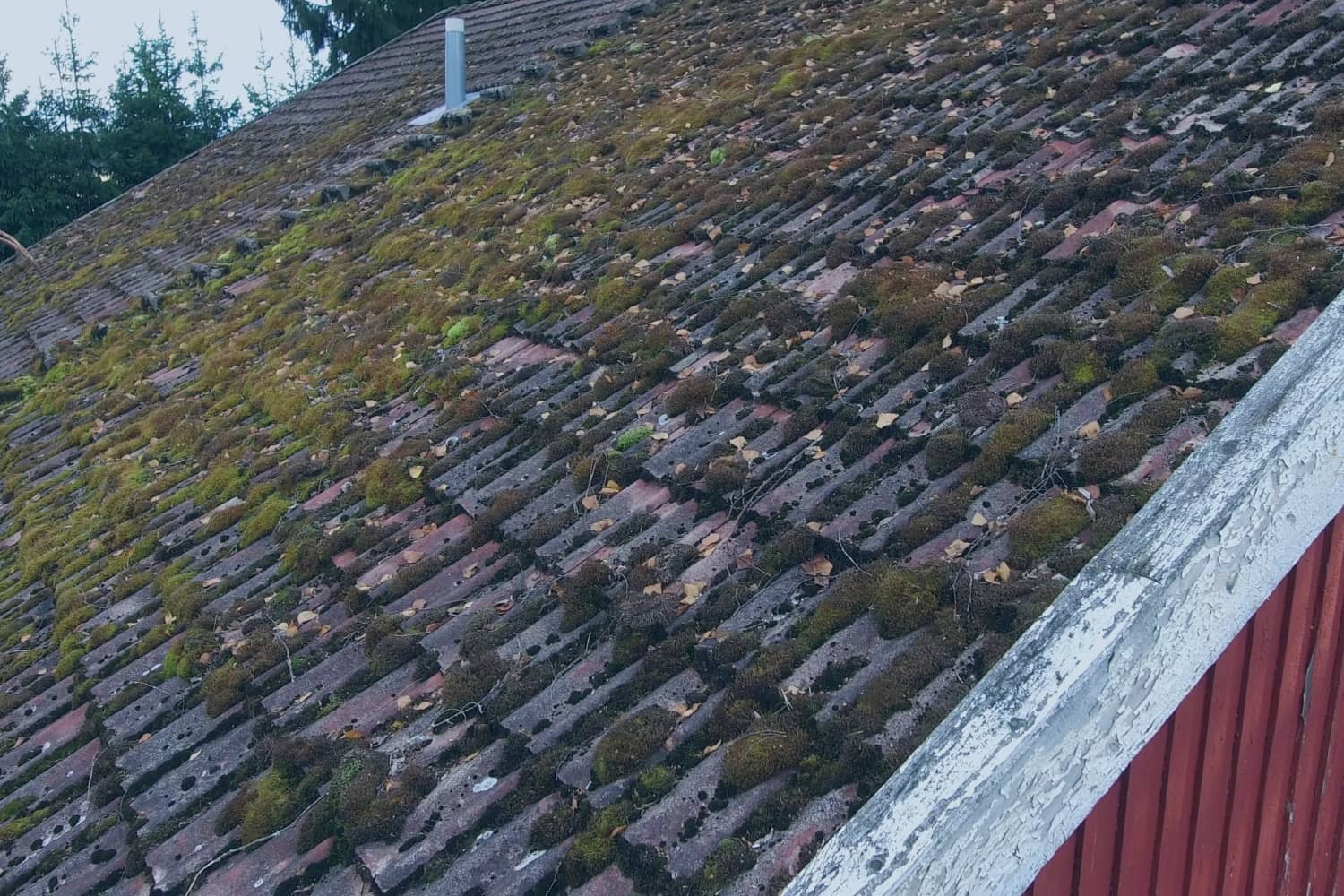
Moss on your roof is more than a cosmetic problem. It acts like a sponge, holding moisture against your shingles until the asphalt breaks down, the edges lift, and water finds its way underneath.
Left alone, a thick moss colony can cut years off a roof’s life.
At Boggs Inspect, we see it on homes across the South Puget Sound, and the green fuzz almost always points to a deeper story about how a roof is aging.
This guide covers the damage moss causes, how to remove it without wrecking your shingles, how to keep it from returning, and what an inspector notices when moss shows up.
Is Moss Actually Bad for Your Roof?
Yes. Moss is genuinely bad for a roof because it holds water against the surface, and trapped moisture is what destroys roofing materials over time.
Unlike a flat stain, moss grows in thick, spongy mounds that stay damp long after the rain stops.
Here is what that constant moisture does:
- Lifts your shingles. Moss creeps under the bottom edges of shingles and pushes them up, which opens a path for water and makes the shingles easier for wind to peel back.
- Breaks down the asphalt. Shingles are protected by a layer of mineral granules. Moss traps grit and moisture that wear those granules away, and once they are gone, the asphalt underneath ages fast.
- Rots the wood. Water that gets past the shingles can reach the roof deck and framing, leading to soft, rotten wood and interior leaks.
- Shortens the roof’s life. Industry estimates put the loss at roughly five to ten years of usable life on a roof that stays covered in moss.
The takeaway: a little green today can turn into a decking repair or an early roof replacement tomorrow.
Moss vs. Algae vs. Lichen: Know What You’re Looking At
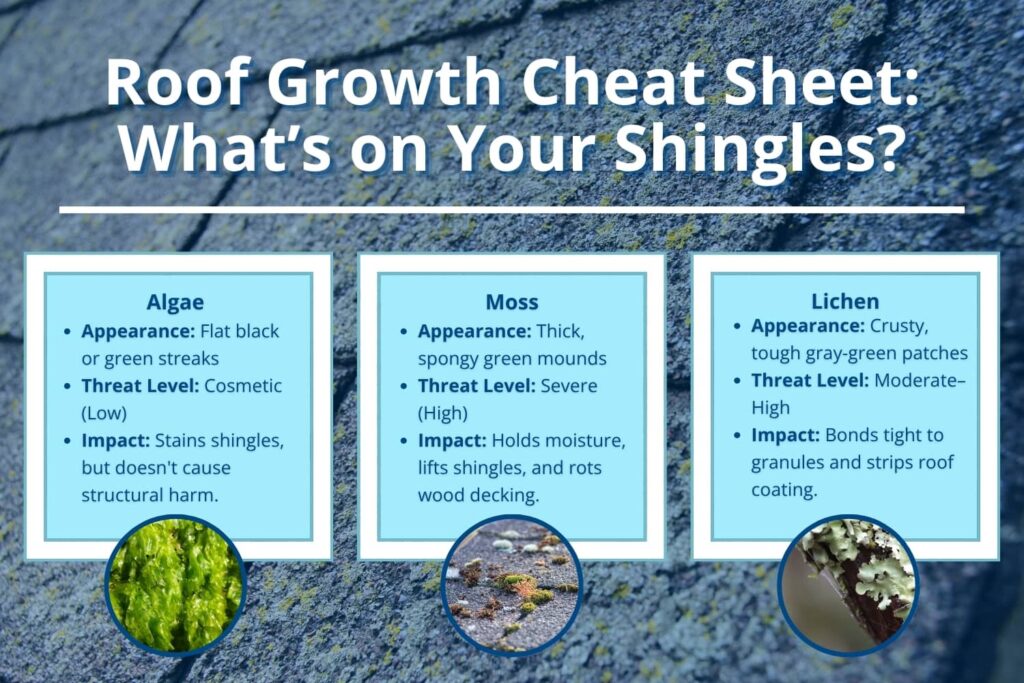
Not every green or black growth on a roof is moss, and the difference matters because they do not all cause the same harm. Here is how to tell them apart:
| Growth | What it looks like | The real risk |
|---|---|---|
| Algae | Flat black or green streaks running down the roof | Mostly cosmetic. It stains and can absorb heat, but there is no strong evidence it physically damages shingles. |
| Moss | Thick, spongy, velvety green mounds | The structural threat. It holds water and lifts shingles. |
| Lichen | Crusty, tough, gray-green patches that cling hard | Stubborn and damaging. Its root-like structures bond to the shingle surface and often need a pro to remove. |
If you are seeing flat black streaks, that is likely algae, and it is a curb-appeal issue. If you are seeing raised green cushions, that is moss, and it deserves attention.
The Asphalt Roofing Manufacturers Association makes the same distinction: algae staining is largely cosmetic, while moss actively traps moisture that shortens shingle life, per ARMA’s guidance on algae and moss.
Why Moss Grows on Roofs in the Pacific Northwest
Moss grows wherever a roof stays cool, shaded, and damp, which describes a good part of Western Washington for much of the year. If your roof rarely gets a chance to dry out, moss will find it.
The usual culprits:
- Shade and tree cover. North-facing slopes and sections shaded by overhanging branches stay wet the longest. Reducing shade and moisture solves most of the battle.
- Constant moisture. Frequent rain, fog, and overcast skies from Lacey and Olympia out to Shelton and Yelm keep roofs damp through fall, winter, and spring.
- Trapped debris. Leaves and needles collect in valleys and along the edges, hold water, and give moss spores a place to take hold.
- Clogged gutters. When water cannot drain, it backs up onto the lower courses of shingles and feeds growth.
Because our climate is so moss-friendly, roofs here need more attention than roofs in dry regions.
If you want a fuller picture of how different roofing materials hold up to our weather, our guide to the common roof types in the PNW and how they age is a good next read.
How to Remove Moss From Your Roof Safely
The safe way to remove moss is to loosen it gently, treat it with a moss-killing solution, and rinse with low pressure, always working from the top of the roof down.
Rushing the job or using the wrong tools does more damage than the moss itself.
A safe step-by-step approach:
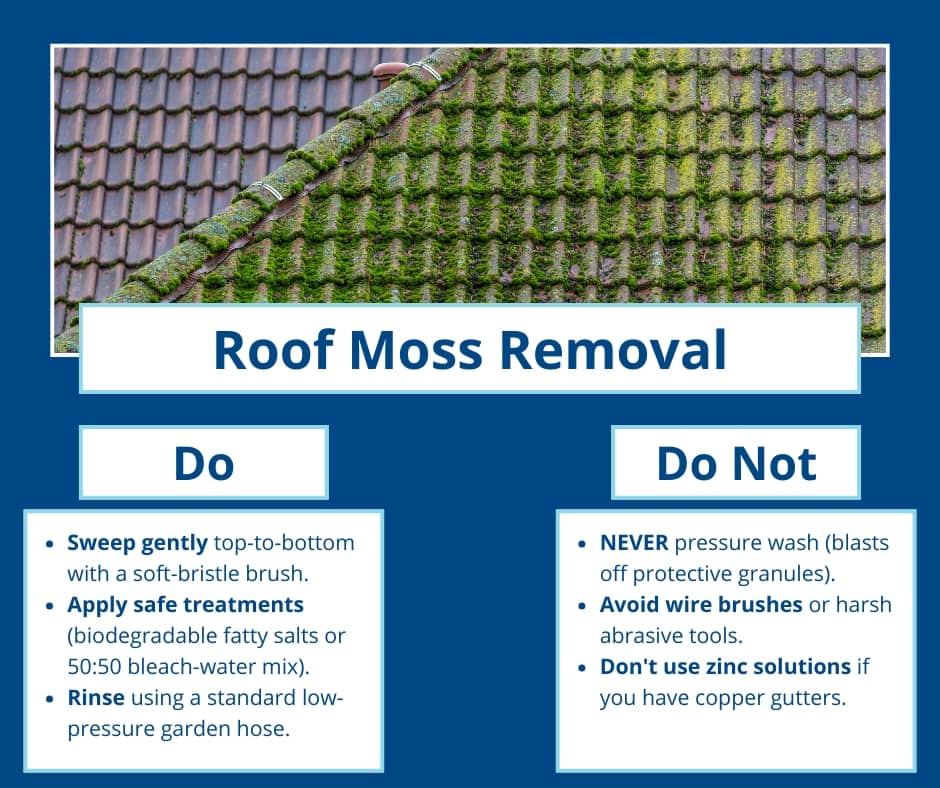
- Clear the loose moss first. Use a long-handled soft-bristle brush or a plastic rake to sweep off the thickest clumps. Push down and out, never up under the shingles.
- Apply a moss treatment. Gentle options include potassium salts of fatty acids (biodegradable and easier on plants below) or a zinc sulfate product. The Asphalt Roofing Manufacturers Association also endorses a 50:50 mix of chlorine bleach and water. Let any solution sit for 15 to 20 minutes.
- Rinse gently, top to bottom. Use a garden hose on low pressure. Working downhill keeps water from being forced under the shingles.
- Let it finish over the following weeks. Treated moss often browns and washes away with later rain rather than all at once.
For specific mixing ratios and a caution about copper gutters, Oregon State University Extension publishes clear numbers in its guide on how to control roof moss.
What to Avoid (The Pressure-Washing Myth)
Never pressure wash your roof. It is the single most common and most expensive mistake homeowners make.
High pressure blasts off the protective granules, breaks the seal between shingles, and can force water under them, which leads to premature roof failure.
Also skip wire brushes and hard scrubbing, both of which strip granules the same way. And if your roof has copper flashing or gutters, avoid zinc products, since zinc corrodes copper.
When in doubt, treat gently and give it time.
How to Prevent Moss From Coming Back
The best moss control is making your roof a place moss does not want to live: drier, sunnier, and cleaner. Removal is temporary if the conditions that grew the moss are still there.
Proven prevention steps:
- Trim overhanging branches. More sunlight and airflow are the most effective long-term fix, and it cuts down on the debris that feeds growth.
- Keep the roof and gutters clear. Clear leaves and needles from the roof and keep gutters flowing so water drains instead of pooling.
- Install zinc or copper strips. Mounted near the ridge, these strips release metal ions when it rains, and the runoff inhibits moss down the slope. Copper reaches farther and lasts longer; zinc is cheaper with a shorter lifespan. Strips slow growth rather than eliminate it, and they work best on upper slopes.
- Choose algae-resistant shingles at replacement. If a new roof is on the horizon, resistant shingles are worth asking about.
A quick seasonal habit helps too: clear debris in the fall before the wet season and check again in spring.
If you are not sure what you are looking at up there, our breakdown of the essential parts of a roof every homeowner should know makes the inspection a lot easier.
What Moss Tells a Home Inspector About Your Roof
To an inspector, moss is a symptom, not just a stain. It signals where a roof stays wet, and wet is where roofs fail. So when we see it, we read it as a map of the roof’s weak spots.
Here is what moss tends to reveal:
- Aging or worn shingles. Moss holds moisture that accelerates granule loss, so heavy growth often sits on shingles already near the end of their life.
- Drainage problems. Moss thrives where water lingers, which points to poor slope, clogged gutters, or debris-packed valleys.
- Possible decking damage. Long-term moisture under the shingles can soften the roof deck, something we check for from both the roof surface and the attic.
- Ventilation issues. A roof that never dries out can also be telling us the attic below is not venting moisture the way it should.
During a home inspection, we specifically look for moss and lichen alongside curling or missing shingles, granule loss, stains, and interior signs of moisture.
We separate cosmetic algae from damaging moss so you know whether you are looking at a wash-and-move-on situation or an early warning worth acting on.
That distinction is the whole point of a professional home inspection: catching a moisture problem before it becomes a leak or an early roof replacement.
What Roof Moss Removal Costs
Roof moss removal is relatively affordable compared with the roof damage it prevents.
Professional roof cleaning generally runs about $0.20 to $0.75 per square foot, which lands most homes in the $450 to $900 range for a full moss treatment, with basic cleanings sometimes lower.
Prevention costs even less. A set of zinc or copper strips typically runs from about $25 to $80 in materials.
Set against the price of replacing a roof years ahead of schedule, both numbers are small.
Related Questions to Explore
Does moss on a roof mean it needs to be replaced?
Not necessarily. Moss by itself does not mean your roof is finished, but it can hide or speed up damage that does. If the shingles underneath are still in good shape, cleaning and prevention are usually enough. If moss has been growing for years alongside granule loss, curling, or soft decking, replacement may be closer than you think. An inspection is the reliable way to tell the difference.
Can I pressure wash moss off my roof?
No. Pressure washing strips the protective granules off asphalt shingles, breaks their seal, and can drive water underneath, all of which shorten the life of the roof. Use a low-pressure garden hose and a soft-bristle brush instead, and always work from the top down.
What kills moss on a roof?
Several treatments work: potassium salts of fatty acids, zinc sulfate products, or a 50:50 mix of chlorine bleach and water endorsed by the Asphalt Roofing Manufacturers Association. Apply the solution, let it dwell for 15 to 20 minutes, then rinse gently. Avoid zinc-based products if your roof has copper flashing or gutters.
Do zinc and copper strips actually work?
Yes, with limits. When rain hits the metal, it carries ions down the roof that inhibit moss growth. Copper is stronger and lasts longer; zinc is cheaper but wears out sooner. Strips work best on the upper slopes near where they are installed and are weakest on lower sections, so they slow moss rather than erase it.
Will removing moss damage my shingles?
It can if you are rough about it. Scrubbing hard, using a wire brush, or pressure washing all remove granules along with the moss. Done gently, with a soft brush, a moss treatment, and a low-pressure rinse, removal is safe and protects the shingles rather than harming them.
When to Call a Professional
Call a professional when the moss is widespread, when your roof is steep or slick, or when you are seeing signs of damage such as lifted shingles, granules in the gutters, or interior water stains.
A wet, moss-covered roof is genuinely dangerous to walk on, and a fall is not worth a cleaning you can hire out safely.
It is also worth a professional look any time moss shows up on an older roof or on a home you are about to buy.
Boggs Inspect serves Lacey, Olympia, Tumwater, Yelm, Shelton, and the greater South Puget Sound, and a home inspection tells you whether that green patch is cosmetic or the first sign of a roof that needs work.
Conclusion
Moss on a roof is a slow, quiet problem that gets expensive if you ignore it.
The essentials:
- Moss traps moisture that lifts shingles, wears away granules, and can rot the deck, so it is worth taking seriously, especially in our wet climate.
- Remove it gently and never pressure wash, then prevent regrowth by trimming shade, clearing debris, and adding zinc or copper strips.
- Because moss marks where a roof stays wet, it is often the first visible clue to a bigger issue.
If moss has taken hold on your roof, the smartest first step is knowing what is really going on underneath it.
Schedule a home inspection with Boggs Inspect and get a clear, unbiased read on your roof’s condition before small problems become big ones.