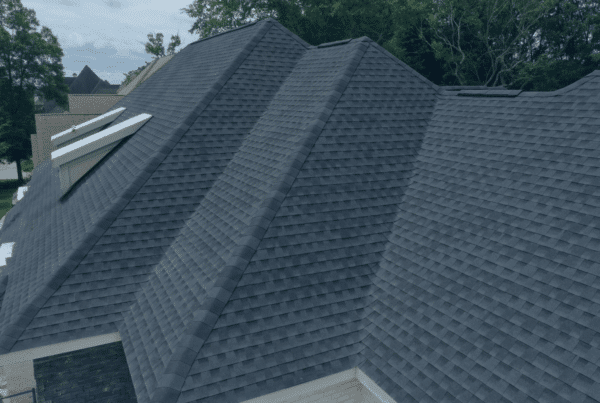
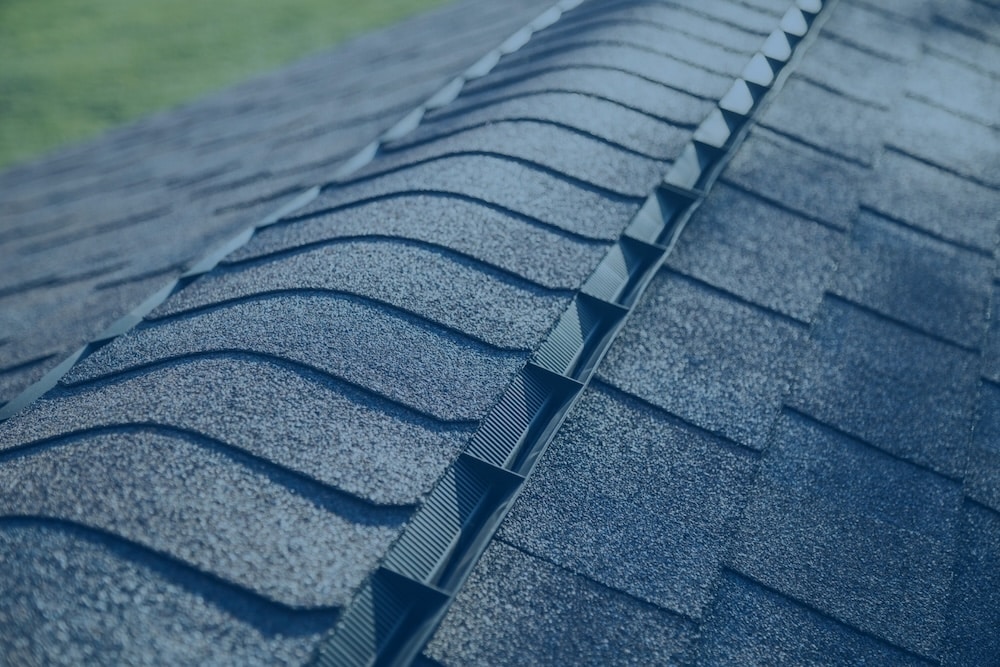
A ridge vent is a long, low vent that runs along the peak of a roof and lets hot, moist air escape from the attic.
It works as a team with intake vents under the eaves, called soffit vents, to keep fresh air moving through the attic all year.
At Boggs Inspect, ridge vents are one of the roof parts our inspectors check on homes across Lacey, Olympia, Tacoma, and the South Sound.
A ridge vent can look fine from the street and still be blocked, missing its intake partner, or letting rain in.
This guide covers how ridge vents work, the main types, how they compare to other vents, cost, and the problems we see most.
How Does a Ridge Vent Work?
A ridge vent works by letting warm attic air rise and exit at the highest point of the roof while cooler outside air enters low at the eaves.
This is called the stack effect. Warm air is lighter, so it climbs toward the ridge on its own. Wind blowing across the roof also creates a small pull at the peak that draws air out.
To make room for airflow, the roofer cuts a narrow slot, about 1 to 2 inches wide, along the roof deck (the sheathing) on each side of the ridge board. The vent sits over that slot.
On most homes, cap shingles are nailed over the top, so the vent blends in with the roofline. Curious about what that roof deck does?
This guide explains what roof sheathing does under your shingles.
Why Ridge Vents Need Soffit Vents
A ridge vent is an exhaust vent. It can only push out as much air as the attic can pull in. That intake comes from soffit or eave vents along the lower edge of the roof.
If you are not sure where those are, here is a quick look at eaves and soffits.
When the soffits are blocked or missing, a ridge vent may pull air from the wrong places. It can draw warm, damp air up from the living space through ceiling gaps and light fixtures.
It can also pull rain or snow in through the vent itself. That is why a ridge vent is only as good as the intake below it.
Types of Ridge Vents
The most common ridge vent today is a shingle-over plastic vent, but there are a few other styles you may find on an older or newer roof.
| Type | What It Is | Good to Know |
|---|---|---|
| Shingle-over (rigid plastic) | Molded plastic sections covered by cap shingles | Most common on asphalt roofs. Blends in. Often has built-in baffles. |
| Roll or fiber mesh | Flexible roll of mesh or fiber matting under cap shingles | Fast to install. Needs proper nailing so it does not crush. |
| Aluminum or metal | Exposed metal vent along the peak | Common on older homes and metal roofs. Some styles have no baffles. |
| Baffled (external baffle) | Any vent with a lip on each side | The baffle helps deflect wind-driven rain and boosts suction. |
A filter or mesh inside the vent keeps out insects, dust, and blowing debris. When that filter is missing, wasps and small pests can move into the attic.
Ridge Vents vs. Other Roof Vents
Ridge vents are usually the most efficient passive exhaust vent because they run the full length of the peak, where the hottest air collects.
Here is how they stack up against other common exhaust vents.
| Vent Type | Where It Sits | Moving Parts? | Main Trade-Off |
|---|---|---|---|
| Ridge vent | Along the roof peak | No | Needs enough ridge length and good soffit intake |
| Box (static) vent | Near the top of a roof slope | No | Vents one small spot; several are needed |
| Gable vent | Wall at each end of the attic | No | Airflow depends on wind direction |
| Turbine vent | Near the peak | Yes (wind-spun) | Can squeak or stick; more parts to wear out |
| Power attic fan | Roof or gable | Yes (electric) | Uses power; can pull conditioned air from the house |
Should You Mix a Ridge Vent With Other Exhaust Vents?
In most cases, no. When a ridge vent shares an attic with box vents, gable vents, or a power fan, the vents can “short-circuit.”
Air gets pulled in through one exhaust vent and right back out the other, skipping the soffits. The lower part of the attic then gets little fresh air.
Roofers often close off old box vents or gable vents when they add a ridge vent. Some building scientists feel the effect is small, so a roofer may judge each attic case by case.
When Is a Ridge Vent Needed?
A ridge vent is a good fit for most homes with a pitched roof, a vented attic, and a ridge long enough to hold it. It is not required by code on its own. What building codes require is enough total ventilation.
Most codes set attic ventilation at 1 square foot of net free area (NFA) for every 150 square feet of attic floor.
That drops to 1 per 300 when the vents are split between high on the roof and low at the eaves, which is what a ridge vent and soffit setup does.
The U.S. Department of Energy’s vented attic guidelines spell out that split and also call for baffles at the soffits to keep insulation from blocking airflow.
Here is a simple example:
- A home has a 1,500 square foot attic.
- Using the 1/300 rule: 1,500 ÷ 300 = 5 square feet of total vent area (720 square inches).
- Split about half and half: 360 square inches of exhaust at the ridge and 360 at the soffits.
- Many shingle-over vents are rated around 18 square inches per linear foot, so that home needs about 20 feet of ridge vent. Always check the product label for its exact rating.
A ridge vent is often not the best choice for:
- Hip roofs with a short ridge, where there is not enough length to vent the attic
- Cathedral or vaulted ceilings with no open attic space above
- Sealed (unvented) attics that are designed with spray foam at the roof deck
- Homes with no soffits or no way to add intake
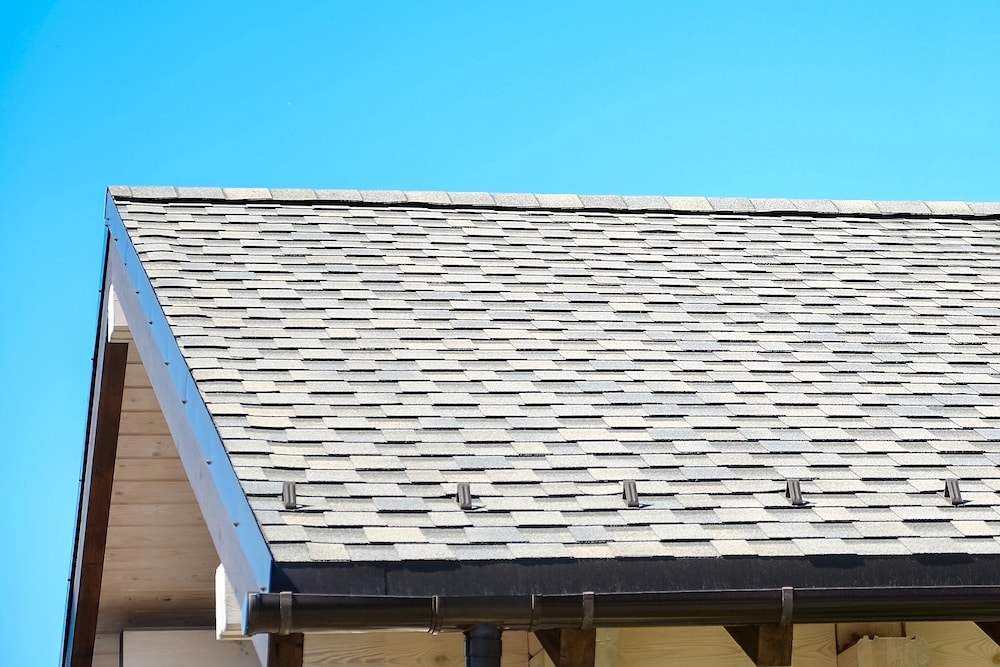
Pros and Cons of Ridge Vents
Ridge vents move air evenly along the whole roof without using power, which is why they are popular. They still have trade-offs.
Pros:
- Even, continuous airflow along the entire peak
- No electricity and no moving parts
- Low profile that blends with the roofline
- Helps lower attic heat in summer and moisture in winter
- Can ease the load on your AC and improve energy efficiency
- Can help shingles and roof sheathing last longer
- Helps reduce the risk of ice dams in snowy climates
Cons:
- Only works with enough soffit intake
- Poor installs can let in wind-driven rain
- Not a fit for hip roofs with short ridges or unvented attics
- Mesh and filters can clog with dust, moss, and needles
- Not a fix for air leaks from the house into the attic
How Is a Ridge Vent Installed?
A ridge vent is installed by removing the cap shingles, cutting a vent slot along the peak, and fastening the vent over it before new cap shingles go on top.
The basic steps look like this:
- Remove the existing ridge cap shingles.
- Mark and cut the vent slot through the sheathing on each side of the ridge board, stopping short of the roof ends.
- Check the attic side to make sure the slot is open and clear.
- Lay the ridge vent over the slot and fasten it with roofing nails long enough to reach the deck.
- Install end plugs or end caps where the vent stops.
- Nail cap shingles over the vent, following the manufacturer’s spacing.
This is roofing work on the highest, steepest part of the house. A wrong cut or short nails can cause leaks that go unnoticed for months.
We recommend hiring a licensed roofer, then having the work checked during your next inspection.
How Much Does a Ridge Vent Cost?
Most homeowners pay about $300 to $650 to install a ridge vent, with a national average near $500, according to 2026 cost data from Angi.
Labor usually runs $100 to $400. The vent material itself is fairly cheap, often around $8 to $12 for a 4-foot section.
Your cost can go up if:
- The roof is steep, tall, or hard to reach
- Soffit vents must be added or cleared at the same time
- Old box vents or gable vents need to be closed off
- The job is part of a full roof replacement (this is often the cheapest time to add one)
Ridge Vent Problems a Home Inspector Looks For
A home inspector checks whether the ridge vent is doing its job, not just whether it is there. In Western Washington, our long, wet winters make moisture the main concern.
Warm, damp air that cannot escape the attic condenses on the cold underside of the roof deck. Over time, that leads to dark staining, mold, and soft sheathing, often on the north side of the roof.
Here is what our inspectors look for on the roof and in the attic:
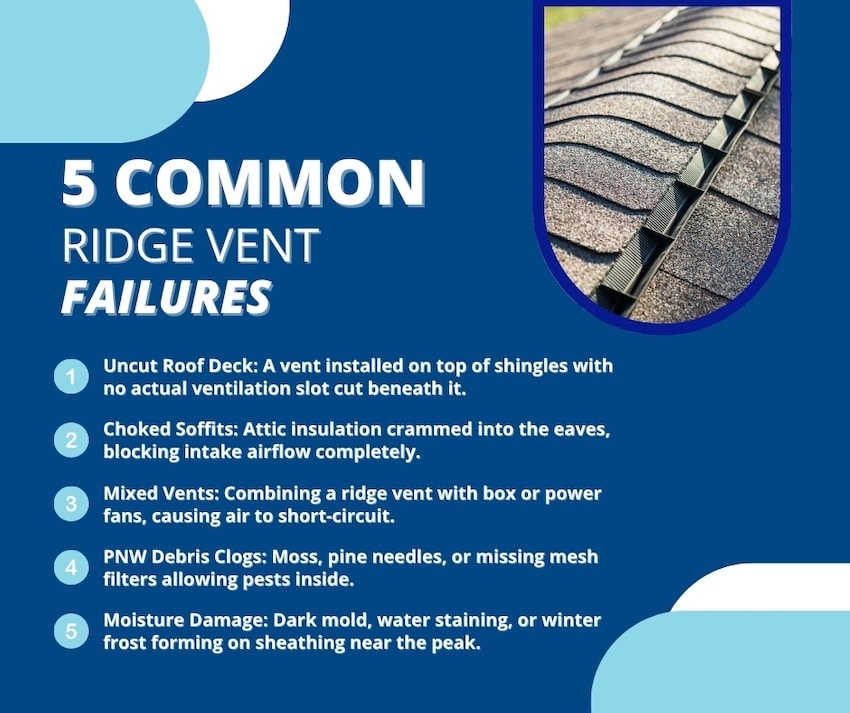
- A vent with no slot cut underneath. It happens more than you would think. The vent is on the roof, but no air can pass through.
- Blocked soffits. Insulation pushed against the eaves, with no baffles, chokes off intake.
- Mixed exhaust vents. A ridge vent plus box vents or a power fan on the same attic.
- Loose, cracked, or lifted cap shingles over the vent.
- Missing filter mesh or signs of insects and pests at the ridge.
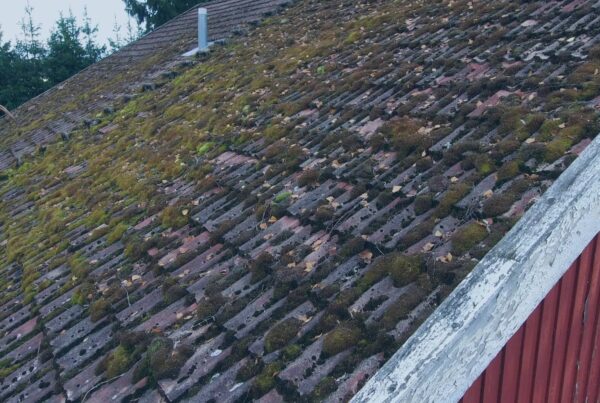
- Moss and debris clogging the vent, which is common in the Pacific Northwest. Learn more about what moss damage means for your roof.
- Water stains, mold, or frost on the sheathing near the peak.
- Bath fans or dryer vents dumping moist air into the attic instead of outside.
The Department of Energy’s Durable Attics guide calls moisture “the number one enemy facing an attic” and lists wet insulation, warped shingles, rotted wood, and mold as warning signs.
Related Questions to Explore
What Is a Ridge Vent on a Roof?
A ridge vent on a roof is the vent that runs along the top edge, where two roof slopes meet. On most homes, it hides under the cap shingles, so it looks like a slightly raised line along the peak. See where it fits with the rest of your roof in our guide to the essential parts of a roof.
Do Ridge Vents Leak?
A properly installed ridge vent should not leak in normal weather. Leaks usually come from a slot cut too wide, nails that are too short, missing baffles, or heavy wind-driven rain on an unbaffled vent. If you see drips or stains near the peak in your attic, have the vent checked.
Does My Roof Need a Ridge Vent?
Your roof needs enough exhaust ventilation, but it does not have to be a ridge vent. If your attic already has balanced intake and exhaust from other vents and stays dry, you may not need to change anything. A ridge vent is a smart upgrade when you replace the roof and your ridge is long enough.
Do Ridge Vents Need Caps?
Most ridge vents are covered by cap shingles, which act as the cap. Other roof vents, like pipe and box vents, have their own cap rules. We cover those in are caps necessary for roof vents.
Does Attic Insulation Affect a Ridge Vent?
Yes. Insulation that is stuffed into the eaves can block soffit intake, which starves the ridge vent. Baffles keep a clear air channel between the insulation and the roof deck. Here are the main types of attic insulation and how they differ. Keeping the attic clear of stored clutter also helps air move, and these attic cleaning tips make the job easier.
When to Call a Professional
Call a professional when you see signs that your attic is not venting well, or before you buy or sell a home. These are good times to get an expert opinion:
- You see stains, mold, or frost on the underside of the roof deck
- Your attic feels hot and stuffy in summer or damp in winter
- Cap shingles along the ridge are loose, cracked, or missing
- You are planning a roof replacement and want to add a ridge vent
- You are buying a home and want to know if the roof and attic are in good shape
A licensed roofer should handle any cutting, installing, or repairs. A home inspector gives you an unbiased look at how the whole system works, from soffits to ridge.
Dwayne Boggs, President of Boggs Inspect, is an American Society of Home Inspectors (ASHI) member and Vice President of the Northwest Home & Building Inspectors Association.
His team has been inspecting homes in Washington since 2004.
A full home inspection includes the roof, attic, and ventilation. If you already own your home, an annual maintenance inspection is an easy way to catch ridge vent and attic moisture issues early.
Conclusion
A ridge vent is a simple, quiet way to let heat and moisture out of your attic, but it only works as part of a balanced system.
- A ridge vent is an exhaust vent at the roof peak that needs soffit intake to work.
- Balanced ventilation protects your roof deck, shingles, and insulation, especially in wet Western Washington winters.
- Blocked soffits, mixed vents, and poor installs are the most common problems.
Want a clear read on your roof and attic? Schedule a home inspection with Boggs Inspect and get an unbiased look at your ventilation before small problems turn into big ones.