At a glance: A septic system treats your home’s wastewater on your own property using a tank and drain field, while a sewer system pipes it to a municipal treatment plant.
Septic means no monthly bill but more homeowner responsibility; sewer means a monthly charge but far less hands-on upkeep.
Which one a home has affects your costs, your maintenance, and, critically, which inspection you need before you buy.
If you’re house hunting around Olympia, Lacey, Tacoma, or the rural stretches of the South Sound, this is one of the first things worth checking on any listing. Homes inside city limits are usually on sewer. Head out toward Shelton, Chehalis, Yelm, Enumclaw, or Eatonville, and private septic systems become common.
Knowing the difference protects your budget and your closing timeline.
What Is a Septic System?
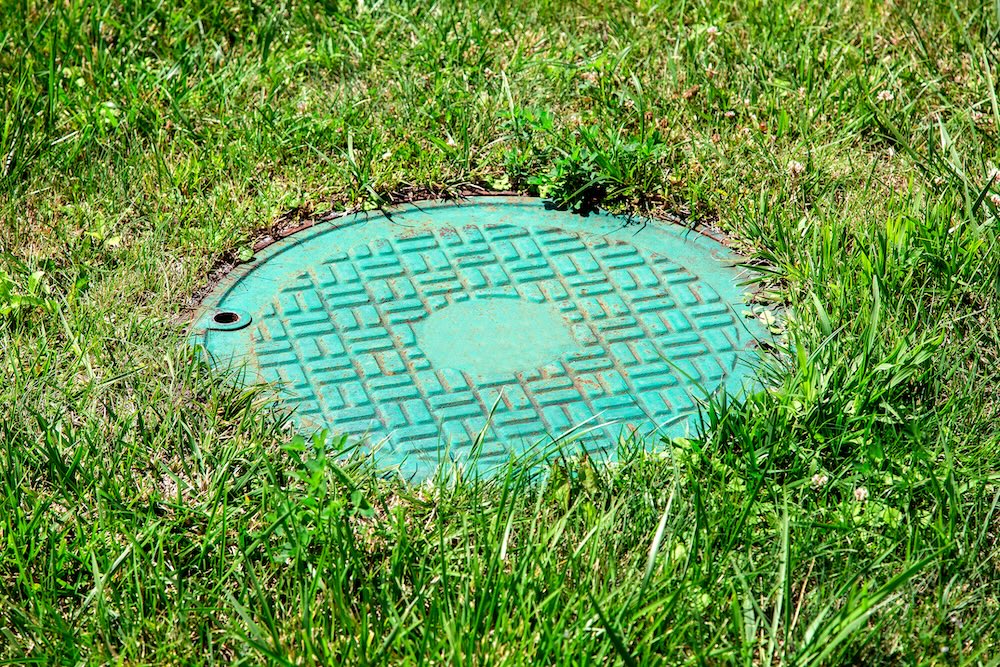
A septic system is a self-contained, on-site wastewater treatment setup that sits entirely on your property.
Wastewater from the home flows into a buried septic tank, where solids settle to the bottom, and lighter grease floats to the top.
The liquid in the middle (called effluent) drains out to a network of perforated pipes in the yard known as the drain field or leach field, where it filters down through the soil naturally.
According to the U.S. Environmental Protection Agency, roughly one in five U.S. households relies on a septic system rather than a public sewer.
In Washington, they’re the norm for properties outside municipal service boundaries, especially on larger rural lots.
The homeowner owns and maintains the whole system. That means no monthly sewer bill, but it also means the tank needs pumping every three to five years and the drain field has to be protected from heavy vehicles, structures, and deep-rooted trees.
What Is a Sewer System?
A sewer system carries your wastewater away from the home through a buried pipe called the sewer lateral, which connects to the city’s main line under the street.
From there, everything travels to a municipal treatment facility, gets treated, and is released back into the environment.
With sewer, the local utility owns and maintains the infrastructure beyond your property line. You pay a recurring sewer charge on your utility bill, and in exchange, most day-to-day upkeep is off your plate.
Sewer systems also handle heavy water flow well, so back-to-back showers and large laundry loads rarely overwhelm them.
One detail buyers miss: the section of sewer lateral running under your yard is still your responsibility. If it cracks, sags, or fills with roots, repairing that stretch falls on you, not the city.
Septic vs. Sewer: Side-by-Side Comparison
| Factor | Septic System | Sewer System |
|---|---|---|
| Who maintains it | You, the homeowner | The municipal utility (beyond your property line) |
| Monthly cost | No monthly bill | Recurring monthly sewer charge |
| Upkeep | Pump tank every 3–5 years; protect drain field | Minimal; occasional line cleaning |
| Handles heavy water use | Can be overwhelmed | Built for high flow |
| Typical location | Rural and unincorporated areas | Cities and dense suburbs |
| Repair responsibility | Entire system is yours | City line is theirs; your lateral is yours |
| Inspection needed | Septic inspection | Sewer scope |
Neither system is universally “better.” The right answer depends on where the home is, your budget, and how much maintenance you want to take on.
Which Is More Common in the South Sound?
Both, depending on where you look. Inside Olympia, Lacey, Tumwater, and Tacoma, most homes are connected to city sewer.
Once you get into the more rural parts of Thurston, Mason, Lewis, and Pierce counties, private septic systems take over, because extending municipal sewer lines that far simply isn’t practical.
This matters when you’re comparing listings, because two homes on the same road can have different systems.
A knowledgeable local inspector or your real estate agent can confirm which system a property uses before you write an offer, so there are no surprises during your due diligence window.
What About STEP Systems?
Some homes inside city limits have a third setup: a STEP (Septic Tank Effluent Pump) system. These are common in Olympia and other parts of the South Sound.
A STEP system is a hybrid. Wastewater from the home flows into a holding tank on the property, where solids settle out. A small pump then sends the liquid to the city’s sewer main. The setup also includes a screen chamber and an alarm box mounted on the outside of the home.
In Olympia, the city maintains the STEP tank, pump, electrical box, and outlet lines, and handles routine pumping. The homeowner is responsible for the home’s plumbing and the sewer line running from the house to the tank, plus the electricity that powers the pump.
For buyers, that means a home “on city sewer” may still have a tank in the yard, and the line feeding that tank is yours to maintain.
A scope of that line is the best way to check its condition before you buy.
Septic vs. Sewer: The Inspection Difference
Here’s where the two systems really diverge for a home buyer, and it’s the part that catches people off guard.
A standard home inspection does not fully evaluate either the sewer lateral or a septic system. Each requires its own specialized inspection, and the tools and process are completely different.
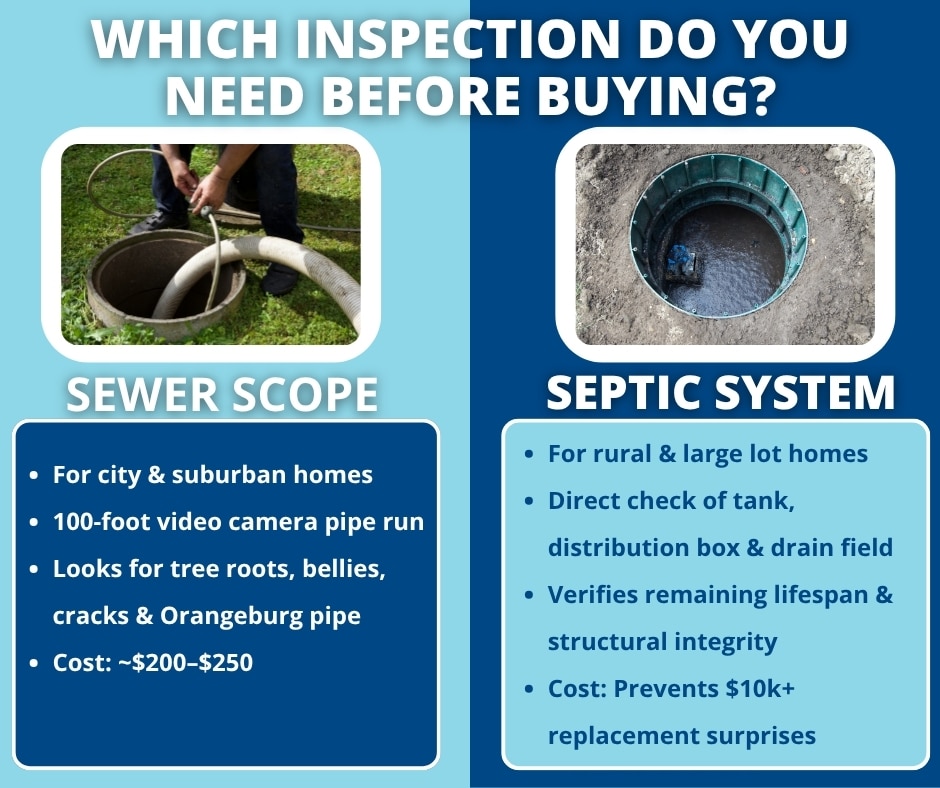
Sewer Scope Inspection (for homes on city sewer)
A sewer scope sends a flexible, high-resolution camera through the sewer lateral, from the home’s foundation (or the nearest access point) out to where it connects with the city’s main line.
The camera transmits real-time video so the inspector can see the actual condition of the pipe you’re responsible for.
It’s the only way to catch problems hidden underground before they become your problem.
A sewer scope can reveal tree root intrusion, pipe bellies (low spots that trap waste), cracks, leaks, and corrosion in cast iron lines. It also catches one issue specific to older homes: sewer lines made of Orangeburg, a tar-paper material used before 1950 that disintegrates and collapses over time.
In our year-round South Sound growing climate, tree root invasion is one of the most common findings, since roots creep into tiny cracks and expand until the line fails.
At Boggs, sewer scope inspections start at $275 when bundled with a home inspection, and a standalone sewer scope is $375. That’s a small price against the thousands in excavation, repair, and landscape destruction a failed line can cost.
Septic Scope Inspection (for homes on a private system)
On a septic property, the line runs to a tank in the yard instead of to the street.
A septic scope sends the camera from the home’s foundation (or the nearest access point) to the septic tank to check that line for roots, cracks, bellies, blockages, and separated joints.
The septic tank, distribution box, and drain field fall outside the scope. A licensed septic professional should evaluate those parts of the system separately.
Both steps matter. A damaged line to the tank can cause backups and costly excavation, and a failed drain field or full system replacement can run thousands to tens of thousands of dollars.
Checking the line and the system before you buy means you don’t unknowingly inherit either problem.
Because Boggs Inspection Services offers both sewer scope and septic scope inspections, you can find out which one a property needs and add it to your home inspection, rather than chasing down a separate company mid-transaction.
Pros and Cons at a Glance
- Septic pros: no monthly bill, works where sewer isn’t available, environmentally sound when maintained, homeowner has full control.
- Septic cons: you pay for pumping and repairs, drain field limits landscaping and parking, can be overwhelmed by heavy use, requires a dedicated inspection before purchase.
- Sewer pros: minimal homeowner maintenance, handles high water flow, city covers main-line repairs, familiar to most buyers.
- Sewer cons: monthly charge for the life of the home, your lateral is still your responsibility, repairs to that lateral can be costly, subject to occasional municipal backups.
Related Questions to Explore
Is it a big deal to buy a house with a septic system instead of sewer?
Not if the system is in good shape and you understand the upkeep. The key is checking it before closing: a septic scope of the line from the home to the tank, plus an evaluation of the tank and drain field by a licensed septic professional. Many South Sound homeowners live comfortably on septic for decades.
Does a standard home inspection cover the sewer line or septic system?
No. A standard home inspection covers visible, accessible systems. The underground sewer lateral needs a separate sewer scope. On a septic property, the line to the tank needs a septic scope, and the tank and drain field should be evaluated by a licensed septic professional. A clean home inspection tells you nothing about the condition of either.
Do I need a sewer scope on a newer home?
It can still be worth it. Newer homes can have installation defects, improper slope, poor connections, or construction debris left in the line. Age alone doesn’t guarantee a sewer line is problem-free.
How much does it cost to convert from septic to sewer?
It varies widely by location and distance to the municipal main, and can run into the thousands. If a property is near a sewer line, some buyers weigh conversion, but for most South Sound homes, a well-maintained septic system is the practical choice.
Which adds more resale value, septic or sewer?
Homes on sewer are often easier to sell simply because more buyers are familiar with them. That said, a documented, well-maintained septic system reassures buyers and removes a common objection. Condition and paperwork matter more than the system type itself.
When to Call a Professional
Bring in a specialized inspector any time you’re buying a home, regardless of which system it has.
Also worth a call: if you notice slow drains throughout the house, frequent backups, or gurgling toilets.
These can signal a damaged or blocked line between your home and the city main or septic tank, and catching it early is far cheaper than an emergency repair.
If you’re buying in a rural area near Shelton, Chehalis, Enumclaw, or Eatonville, a full evaluation of the septic system, well, and water quality should be part of your due diligence.
For city properties, a sewer scope is the single best way to rule out a costly hidden surprise.
Conclusion
Septic and sewer both do the same job, moving wastewater safely away from your home, but they do it in very different ways, with different costs, maintenance demands, and inspection needs.
For South Sound buyers, the smartest move is to find out which system a home has early, then get the right specialized inspection before you close.
Boggs Inspection Services performs both sewer scope and septic inspections across Olympia, Lacey, Tacoma, and the surrounding Washington communities, and we can add either one to your home inspection.
Schedule online with the code “online” for $25 off, or request a free quote, and we’ll help you figure out exactly what your future home needs.