
You’ve cleaned the house, are eating right, and getting enough sleep. But something still feels off. Persistent headaches, a cough that won’t quit, brain fog that follows you through the day, or allergy symptoms that only show up at home. When your health improves the moment you leave and gets worse when you return, your living spaces may be the problem.
Health professionals sometimes call this the Away Test. If your symptoms consistently improve when you’re away from home and return when you come back, that’s a strong signal that your indoor environment deserves a closer look.
In Washington State, this is more common than most homeowners realize. The Pacific Northwest climate creates conditions that are unusually favorable for mold growth, poor indoor air quality, and a range of hidden risks that don’t announce themselves. Here’s what to look for and what you can do about it.
Why Indoor Air Quality Matters More Than Most People Think
According to the Environmental Protection Agency, Americans spend approximately 90% of their lives indoors, and concentrations of some indoor pollutants can be two to five times higher than typical outdoor levels.
Poor indoor air quality is often caused by how a home is built, how well it is sealed, and the presence of hidden issues like mold, moisture, and chemical off-gassing.
Symptoms from indoor pollutants frequently overlap with common illnesses, including respiratory problems, skin irritation, eye irritation, headaches, fatigue, and brain fog, which is exactly what makes them easy to overlook.
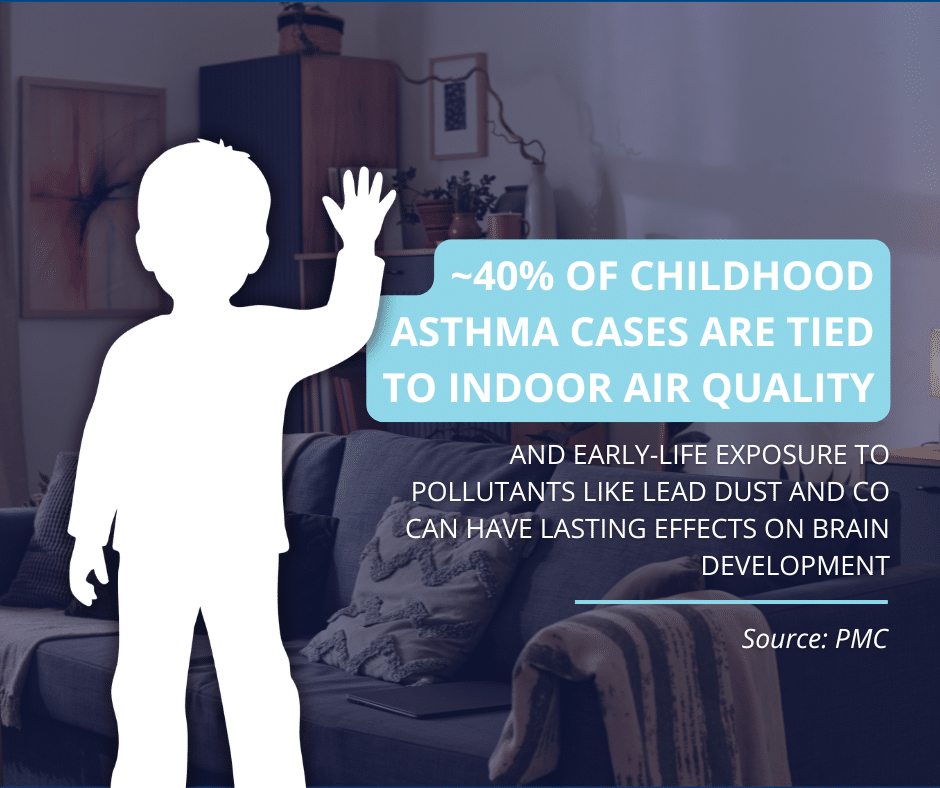
The American Lung Association and the EPA both identify indoor air quality as a top environmental health concern. Children and pets are known to be at an even higher risk of health concerns due to poor indoor air quality.
Mold Across the Pacific Northwest
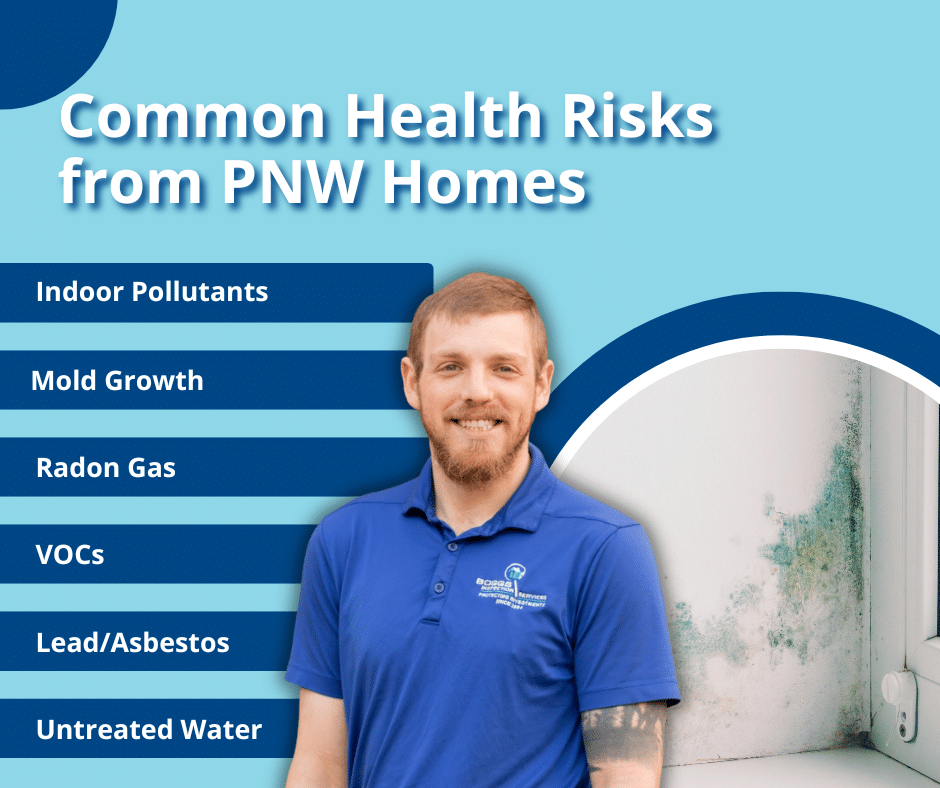
Mold is the most widespread indoor air quality issue that Boggs Inspection Services inspectors encounter across Washington homes. The region’s long rainy season, cool temperatures, and sustained humidity create near-ideal conditions for mold growth, and mold rarely starts where you can see it.
It grows in crawl spaces, behind bathroom walls, in attic cavities with poor ventilation, and under flooring where slow leaks go unnoticed. Mold spores travel through the air your family breathes, and mold allergies are among the most common triggers for chronic indoor health complaints.
Symptoms include nasal congestion, eye irritation, throat irritation, wheezing, and, in more serious cases, significant respiratory distress. People with asthma may experience more frequent asthma attacks when mold spores are present at high concentrations.
The EPA recommends keeping indoor humidity levels below 50% to prevent mold growth. Warning signs include a musty odor that worsens after rain, visible water stains or dark spots on walls and ceilings, and chronic respiratory symptoms that improve when you leave the house.
Black mold is not the only type that causes health problems. Many mold varieties at high concentrations trigger mold allergies and breathing problems. The only reliable way to know what’s present is professional mold and indoor air quality testing. Boggs Inspection Services offers this as an add-on to any residential inspection throughout Washington State.
Radon Hiding Beneath Your Home
Radon is a colorless, odorless, radioactive gas produced by the natural breakdown of uranium in soil and rock. It seeps through foundation cracks, gaps around pipes, and crawl space floors, then accumulates indoors. The EPA estimates radon causes approximately 21,000 lung cancer deaths annually in the United States, making it the second leading cause of lung cancer after smoking.
A radon remediation system is highly effective and permanently reduces levels in most homes. If you’ve never tested, that is the single most important step you can take for your family’s long-term health.
Carbon Monoxide and Combustion Gases
Carbon monoxide is a colorless, odorless gas produced by the incomplete combustion of fuels. It can come from a gas stove, furnace, water heater, fireplace, or attached garage. At low levels, carbon monoxide exposure causes flu-like symptoms, including headaches, nausea, and dizziness that are routinely mistaken for other illnesses.
Every home with fuel-burning appliances should have a carbon monoxide detector on every level, tested monthly, and replaced every five to seven years.
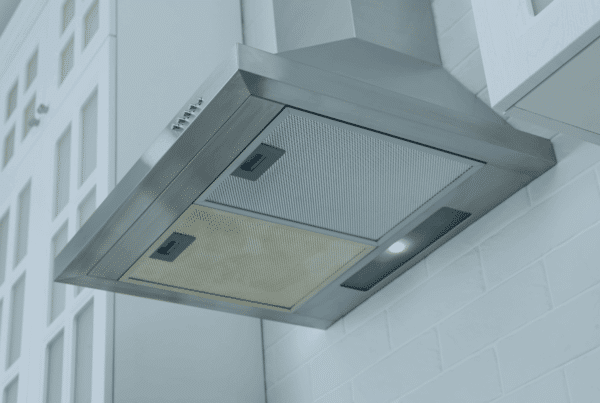
Gas stoves and poorly vented heaters also produce nitrogen dioxide and other nitrogen oxides that irritate airways and contribute to respiratory problems over time. Using an exhaust hood when cooking and ensuring adequate fresh air ventilation reduces exposure significantly.
Volatile Organic Compounds and Household Chemicals
Volatile organic compounds, or VOCs, are gases emitted from paints, adhesives, flooring, cleaning products, air fresheners, and synthetic carpeting. Concentrations can be significantly higher indoors than outdoors, particularly in newer homes or recently renovated spaces.
Symptoms include headaches, dizziness, eye and throat irritation, skin irritation, and brain fog. Household chemicals containing ammonia or bleach can produce toxic fumes when mixed.
Ventilate aggressively, choose low-VOC or zero-VOC products whenever possible, and avoid synthetic air fresheners, which are among the highest VOC-producing household products.
Lead and Asbestos in Older Washington Homes
Homes built before 1978 may contain lead-based paint, a serious concern, especially for households with young children. Household pipes in older homes can also harbor lead that leaches into drinking water through pre-1986 plumbing.
Lead poisoning causes developmental problems, brain damage, and lasting neurological harm in children, even at low exposure levels.
Asbestos is present in many Washington homes built before the mid-1980s, appearing in pipe insulation, ceiling tiles, vinyl floor tiles, and drywall compounds. The danger comes during renovation work that disturbs these materials. Boggs Inspection Services offers lead and asbestos testing as an add-on to residential inspections.
Water Quality and Private Well Risk
Well water is not treated or regulated the way municipal water is, and contamination can come from agricultural runoff, septic systems, naturally occurring minerals, bacteria, or aging infrastructure.
Common concerns include coliform bacteria, nitrates, arsenic, and iron or manganese. If you’re on a private well and have never tested, you don’t know what you’re drinking.
If you’re on a private well and have never tested, you don’t know what you’re drinking. Hard water, which contains high levels of minerals like calcium and magnesium, can also affect your home’s plumbing and potentially contribute to skin irritation and other health issues.
Boggs Inspection Services offers water testing, well pump flow rate testing, and sewer scope and septic inspections for homes not on municipal sewer. For rural areas near Shelton, Chehalis, Enumclaw, or Eatonville, a full water and well evaluation should be part of every home purchase.
Dust Mites, Pests, and Biological Pollutants
Dust mites live in bedding, upholstered furniture, and carpeting and are among the most common triggers for indoor mold allergies and asthma attacks. They thrive in humid conditions, making Washington homes particularly susceptible. Reducing indoor humidity and washing bedding regularly in hot water are the most effective management strategies.
Wood-destroying organisms like carpenter ants and subterranean termites are also a biological risk in Washington’s damp climate. A WDO and pest inspection from Boggs Inspection Services identifies active pest activity, prior damage, and the moisture conditions attracting them.
Other Questions Washington Homeowners Ask
- Can a new home still have poor indoor air quality? New construction often has elevated VOC levels from fresh building materials. If you have just bought a home, it’s a good idea to have a post-purchase inspection before you move in.
- How do I know if I need a sewer scope inspection? Frequent plumbing backups, slow drains, unpleasant odors near sewer lines, or unexplained moisture around your home’s foundation are common indicators that a sewer scope inspection may be necessary. Boggs Inspection Services includes sewer scope evaluations as part of their comprehensive home inspection services.
- Should I test for lead and asbestos before I renovate? Any renovation on a pre-1980 home involving walls, floors, or pipe insulation should include testing before work begins. Boggs Inspection Services offers comprehensive lead and asbestos testing as add-on services to ensure your home is free from these dangerous hazards.
- I’m a first-time homebuyer. Where should I start with inspections? For first-time homebuyers, starting with a comprehensive residential inspection is essential. This inspection assesses the overall condition of the home. Consulting with a qualified inspector early in the process helps you understand potential risks and prioritize necessary evaluations.
When to Call a Professional
If you notice that your symptoms consistently improve when you are away from home and return once you come back, or if you detect musty odors that you cannot locate, it is time to call a professional.
Additionally, if your home was built before 1980 and has never undergone lead or asbestos assessment, or if you rely on a private well with untested water, professional evaluation is essential. Recent water damage or roof leaks that were not fully remediated also warrant expert attention to ensure your living environment is safe and healthy.
A residential inspection provided by Boggs Inspection Service covers the full physical condition of the home, and add-on services address the environmental concerns a standard visual inspection cannot. Our annual maintenance inspection is also a valuable tool for ongoing peace of mind.
Conclusion
Your home should be the place where you feel your best and breathe easiest. If something has felt off and you haven’t been able to explain it, your indoor environment deserves serious attention.
Washington homes face conditions that make hidden health risks genuinely common. Moisture drives mold. Geology drives radon. Older housing carries lead and asbestos. Private wells need regular testing. None of these issues resolves on its own.
Boggs Inspection Services has been helping homeowners across the South Sound and greater Washington State since 2004. Whether you’re in Olympia, Tacoma, Gig Harbor, Puyallup, or anywhere across our service area, we’re here to help your family breathe easier.
Schedule online today or give our team a call.