
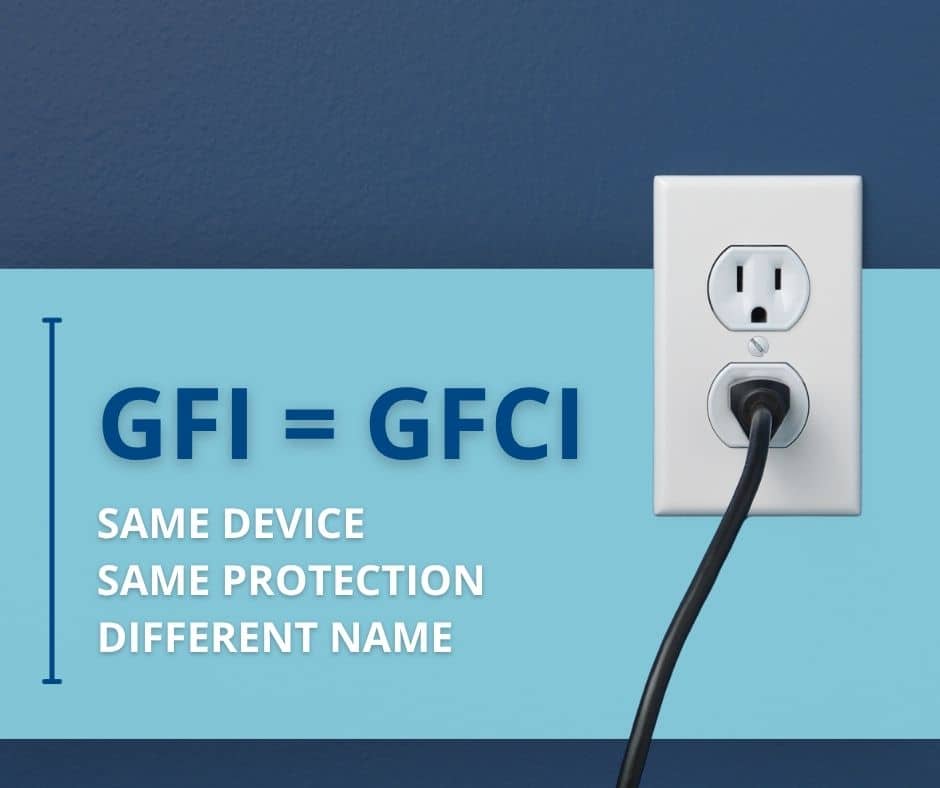
GFI and GFCI are the exact same device with two different names. GFI stands for Ground Fault Interrupter, while GFCI stands for Ground Fault Circuit Interrupter. The modern standard term is GFCI, but if someone says GFI, they mean the same thing. At Boggs Inspection Services, we see both terms used on outlet labels and in home inspection reports all the time, which is why it’s worth clearing up the confusion once and for all.
What Is a GFI or GFCI Outlet?
A GFCI outlet is a specialized electrical outlet designed to protect people from electric shock. It does this by constantly monitoring the flow of current through a circuit.
If it detects even a tiny imbalance between the power going out and the power coming back, it shuts off the circuit in as little as 1/40th of a second. That response time is fast enough to prevent a dangerous shock.
Per the U.S. Consumer Product Safety Commission, GFCI protection can prevent hundreds of electrocutions and thousands of electrical injuries in homes each year.
How Ground Fault Protection Works
A ground fault happens when electricity takes an unintended path to the ground. This can occur when water gets near an outlet, when a wire contacts a conductive surface, or when someone touches a faulty appliance. Without protection, that unintended path can run straight through a person’s body.
The GFCI outlet monitors both the hot wire and the neutral wire. Under normal conditions, the current on both wires should be equal. When the GFCI senses a difference of as little as 4 to 5 milliamps, it trips the circuit before a shock can cause injury.
GFI vs. GFCI
There is no difference in any meaningful functional sense. GFI (Ground Fault Interrupter) is simply an older, informal term that electricians used before the National Electrical Code (NEC) standardized the terminology.
The NEC and product manufacturers now use GFCI exclusively. If you see “GFI” on an outlet or in an older inspection report, it refers to the same protective device.
Some electricians use GFI specifically when referring to a single outlet/receptacle, while GFCI can refer to both outlets and circuit breakers. But the underlying protection is identical.
Types of Ground Fault Protection Devices
Understanding your options helps when scheduling a home inspection or reviewing an inspection report.
GFCI Outlet (Receptacle)
A GFCI outlet is the most common type you’ll encounter in homes. It’s the outlet with the small TEST and RESET buttons on the face.
It protects the outlet itself and, in some configurations, other outlets wired downstream from it on the same circuit. These are the best options when only a few specific outlets in a space need protection.
GFCI Circuit Breaker
A GFCI circuit breaker is installed in the electrical panel and protects every outlet on that entire circuit. It’s a good choice for new construction, garages, outdoor circuits, and situations where most outlets on a run need protection. You reset a GFCI breaker at the panel, not at the outlet.
One note: you do not need both a GFCI outlet and a GFCI circuit breaker on the same circuit. One or the other provides sufficient protection.
GFCI vs. AFCI
An AFCI (Arc Fault Circuit Interrupter) protects against arc faults, which are dangerous sparks that can occur inside walls from damaged or loose wiring. These are different from ground faults. GFCI devices stop electric shocks; AFCI devices stop electrical fires.
Some modern combination devices do both. The National Fire Protection Association recommends AFCI protection in bedrooms and living areas, while GFCI is required near water sources.
If you want to know more about how circuit issues show up during inspections, our guide on how to tell if a circuit breaker is bad walks through the signs.
Where Are GFCI Outlets Required?
The NEC requires GFCI protection in any area where electricity and water could come into contact. Here’s where you’ll find them in most homes:
- Bathrooms: all receptacles (required since the 1970s)
- Kitchens: countertop receptacles within 6 feet of a sink
- Garages: all receptacles
- Outdoor receptacles: all exterior outlets
- Crawl spaces and unfinished basements
- Laundry areas: receptacles near utility sinks
- Boathouses and pools/hot tubs
If your home was built before 1975, it may have original outlets that predate GFCI requirements. A residential home inspection will flag any areas that should have GFCI protection but don’t.

How to Test and Reset a GFCI Outlet
The National Electrical Code recommends testing GFCI outlets monthly. Here’s how to do it:
- Press the TEST button. The RESET button should pop out, cutting power to the outlet.
- Plug a lamp or phone charger in to confirm the outlet has no power.
- Press RESET to restore power.
If the RESET button doesn’t pop out when you press TEST, the outlet may have failed and needs replacing. In the event that it trips immediately after you reset it, there may be a wiring issue downstream. If you can’t get it to reset at all, the problem may be at the circuit panel.
All three of these situations call for a licensed electrician.
You can also learn more about what is tripping your circuit breaker if you’re troubleshooting related electrical issues.
Related Questions to Explore
- Does a home inspection check for GFCI outlets? Yes. GFCI compliance is a standard part of Boggs Inspection Services’ residential home inspection. Our inspectors test every GFCI outlet in the required locations and flag any that fail the test or are missing where code requires them. You’ll see each finding clearly documented in your inspection report.
- Will a GFCI issue show up on a pre-listing inspection? It will. If your home has non-functional, missing, or incorrectly wired GFCI outlets, a buyer’s inspector is going to find them. A pre-listing inspection from Boggs lets you find and fix those issues before the home hits the market, so they don’t become negotiating points or deal-breakers.
- Can a home inspection tell me if my older home needs GFCI upgrades? Yes, and it’s one of the most common electrical findings in homes built before 1975. During a residential inspection, Boggs inspectors check whether wet areas have GFCI protection, whether existing outlets respond correctly to testing, and other notes in the report.
- What electrical issues does Boggs check during an annual maintenance inspection? A lot. An annual maintenance inspection from Boggs covers your full electrical system, including GFCI outlet function, panel condition, visible wiring issues, and signs of overheating at outlets and breakers.
- If I’m buying a home, how do I know the GFCI outlets are actually working? You ask for a home inspection before you close. Visual checks alone don’t tell the whole story. We press the button, verify the trip, verify the reset, and note any that don’t perform correctly during our residential inspections.
- Does Boggs inspect electrical systems in commercial buildings, too? Yes, GFCI requirements in commercial spaces are stricter than in residential spaces, and non-compliance can create liability. Boggs offers commercial building inspections that include a full electrical system review, including ground fault protection in required areas.
When to Call a Professional
GFCI outlets are one of the easiest safety features to test yourself, but there are situations where a licensed electrician is the right call:
- An outlet won’t reset or keeps tripping immediately after resetting
- You’re installing new outlets in bathrooms, kitchens, or outdoor areas
- Your home was built before 1975 and has no GFCI protection in wet areas
- You’re not sure which outlets are protected by a GFCI circuit breaker upstream
- You see signs of overheating, discoloration, or burning around any outlet
If you’re buying or selling a home in the Olympia, WA area, Boggs Inspection Services will check every electrical component, including GFCI compliance, as part of a full residential home inspection. We serve Lacey, Tumwater, Tacoma, and surrounding communities.
Conclusion
GFI and GFCI mean the same thing: a device that shuts off power to prevent electric shock when it detects a ground fault. GFCI is the current standard term. These outlets are required by code in bathrooms, kitchens, garages, and outdoor areas, and they need to be tested monthly to confirm they’re working.
Key takeaways:
- GFI = GFCI. Same device, same protection, different name.
- GFCI outlets and GFCI breakers both work: an outlet for localized protection, a breaker for whole-circuit protection.
- Test yours monthly. Replace any that fail the test.
Questions about your home’s electrical system? Contact Boggs Inspection Services in Olympia, WA, to schedule an inspection.