A home inspection covers the visible and accessible parts of a home’s structure and systems, including the roof, foundation, electrical, plumbing, HVAC, and interior components. At Boggs Inspection Services, our ASHI-certified inspectors work through every major area of the home so you know exactly what you’re buying or selling before the deal closes.
This guide covers what gets checked, what buyers, sellers, and agents each need to know, what falls outside a standard inspection, and which add-on services give you the most complete picture.
What a Home Inspector Checks From Top to Bottom
A standard home inspection is a visual, non-invasive review. The inspector does not tear out walls or dismantle systems. The goal is to find conditions that are not working as they should and report them clearly so everyone involved can make informed decisions.
Per the InterNACHI Standards of Practice, inspectors must evaluate the following systems and components:
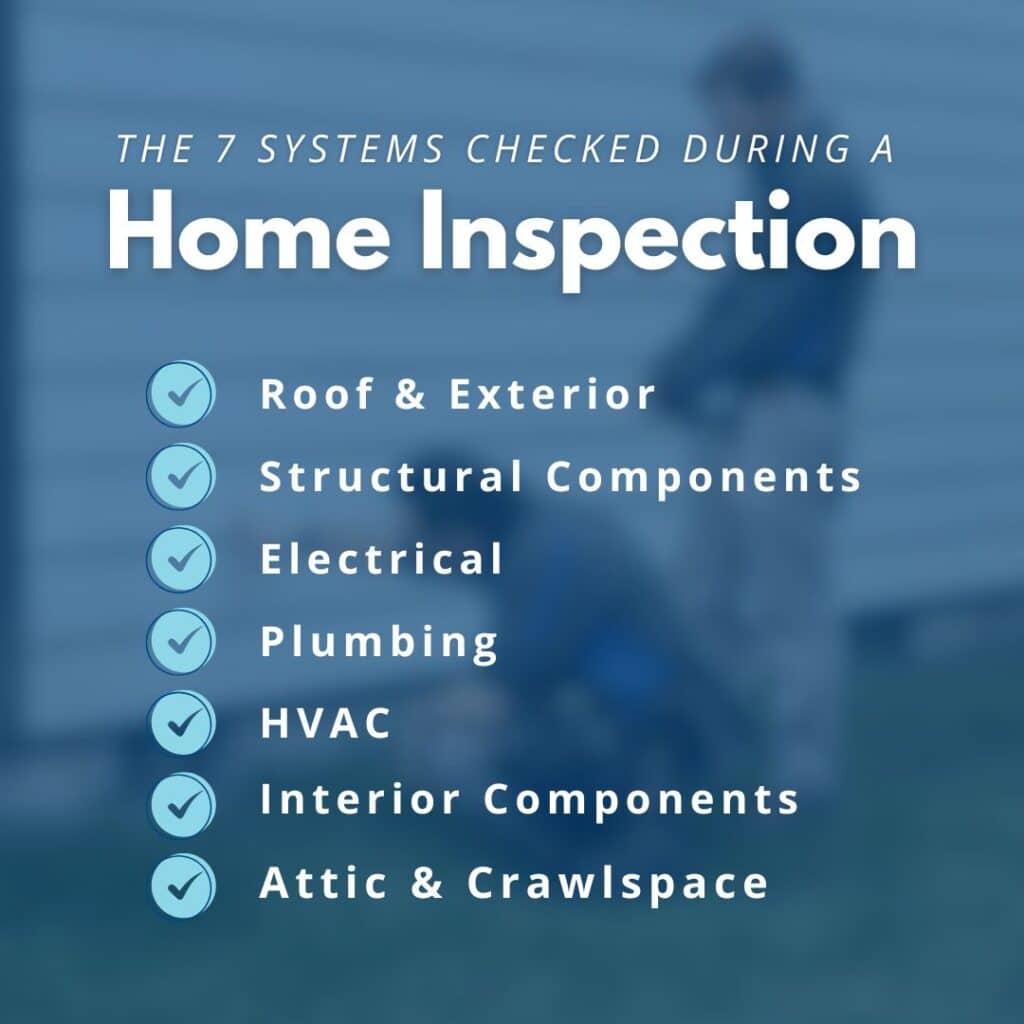
Roof and Exterior
The inspector looks at shingles, flashing, fascia, and gutters for signs of wear, missing material, or improper drainage. Gutters should direct water away from the foundation. Chimneys and skylights get checked for gaps and deterioration.
On the exterior, the inspector reviews siding, masonry, stucco, paint, and the clearance between siding and soil (a minimum of 6 inches is standard to prevent moisture damage).
Structural Components and Foundation
The foundation, visible framing, floors, and load-bearing walls are reviewed for cracks, settling, or shifting. Horizontal cracks with a bulge in a concrete wall are a serious flag.
Sticking doors and sloping floors can indicate foundation movement. The inspector notes whether to monitor a minor crack or call in a structural specialist.
Electrical System
Every accessible outlet, panel, service grounding, light fixture, and switch gets reviewed. The inspector checks that circuits are properly loaded and that the panel is not outdated or presenting a fire risk.
GFCI protection is verified within 6 feet of sinks and in bathrooms.
Plumbing
The inspector runs water at every fixture, checks supply and drain lines, tests water pressure and temperature, and looks under sinks for leaks.
Toilets, sump pumps, water heaters, and vent systems are all part of the review. If the property uses a well or septic system, a note is made that those components need separate specialized testing.
HVAC
The heating and cooling systems are operated during the inspection to confirm they respond and function. The inspector estimates remaining useful life, checks thermostats and distribution systems, and reviews filters and visible ductwork.
Chimneys and flue connections tied to heating equipment are also included.
Interior
Inside, the inspector looks for stains, cracks, and signs of water intrusion on walls and ceilings. Windows and doors are tested for operation and seal.
Cabinet doors, drawer hardware, and range hood fans are checked for proper function. Smoke alarms and carbon monoxide detectors are noted on the report.
Attic and Crawl Space
The inspector enters accessible attic and crawl spaces to evaluate insulation levels, ventilation, and any visible structural framing. These areas often reveal moisture problems, pest damage, or insulation gaps not visible from the living space.
What Buyers, Sellers, and Agents Should Know
The home inspection is often the most pivotal moment of a real estate transaction, acting as the ultimate reality check for everyone involved.
Here is how each party can navigate the process effectively to ensure a smooth path to the closing table.
For Buyers
The home inspection is your last clear window to uncover defects before closing. Attend if you can; being present lets you see issues in context and ask questions that never make it into a written report.
Bring your repair-negotiation mindset: every finding is either a negotiating point, a repair request, or confirmation that you’re making a sound purchase.
One note on Washington State: if the home uses a well or septic system, budget for separate add-on testing since those systems are outside the scope of a standard inspection.
For Sellers
Getting ahead of the inspection improves your closing odds. Remove pets from the home so every room and outdoor space stays fully accessible. Clear clutter from counters, electrical panels, and utility areas since an inspector who cannot reach something cannot inspect it.
A clean, accessible home sends a positive signal. Many sellers in the South Sound area choose a pre-listing inspection to uncover issues on their own terms and price accordingly, rather than being surprised during the buyer’s contingency window.
For Real Estate Agents
The inspection report shapes every negotiation that follows. Agents who understand what inspectors check are better positioned to set expectations before the day arrives and to walk clients through findings afterward.
For buyers considering waiving the inspection contingency in a competitive market, the risk is real: a house is most people’s largest purchase, and skipping the inspection removes the primary tool for identifying expensive problems before closing.
What a Standard Home Inspection Does NOT Cover
Knowing what is not included is just as useful as knowing what is. A standard inspection is limited to what is visible and accessible on the day of inspection. The inspector does not move furniture, excavate, or test for environmental hazards.
Standard inspections typically do NOT include:
- Pest and wood-destroying organism (WDO) testing
- Mold or indoor air quality testing
- Sewer scope or septic system evaluation
- Water quality or well pump flow testing
- Lead paint or asbestos sampling
- Radon gas testing
- Irrigation system review
- Specialized structural engineering review
These items require a separate specialist or an add-on service. If the home has a sewer lateral older than 20 years, a private well, or a history of moisture problems, those add-ons can save you significantly more than they cost.
Specialty Inspections and Add-On Services
A thorough home purchase often combines a standard inspection with one or more specialty services. Boggs Inspection Services offers a full menu of add-ons so you can schedule everything in one call:
- Sewer Scope and Septic Inspections: A camera inspection of the sewer lateral reveals root intrusion, pipe damage, or blockages that do not appear anywhere else on the report.
- WDO/Pest Inspection: Wood-destroying organisms like termites and carpenter ants can be active well before visible damage appears.
- Mold and Indoor Air Quality Testing: Recommended whenever there is a history of moisture, flooding, or visible staining, particularly in attics and crawl spaces.
- Water Testing: For homes on a private well, testing for contaminants is the only way to know the water is safe.
- Lead and Asbestos Testing: Homes built before 1978 may contain hazardous materials. Testing gives you documented results, not assumptions.
- 11-Month Warranty Inspection: For new construction, this catches defects before your builder’s warranty expires.
- Pre-Listing Inspection: Sellers who inspect before listing can price confidently and negotiate from strength.
- Annual Maintenance Inspection: Catch small issues before they grow into large repair bills, useful for any homeowner regardless of when they bought.
If you are buying a home in the South Sound area and want to learn more about what Boggs can bundle into a single appointment, a well pump flow test or sewer scope is often added the same day as the standard inspection.
Related Questions to Explore
- How long does a home inspection take? Most home inspections take two to four hours for a standard single-family home. Larger homes, homes with multiple outbuildings, or properties with many add-on services scheduled may run longer. The written report typically arrives within 24 hours after the inspection.
- Should I be present during a home inspection? Yes. Attending the inspection lets you see conditions in person, ask questions in the moment, and gain context that the report alone cannot fully convey. Boggs inspectors are experienced working with out-of-state buyers, even when in-person attendance is not possible.
- What happens if the home inspection finds problems? Most reports include findings. The real question is whether those findings are minor maintenance items or major defects. With a home inspection contingency in your purchase agreement, you can request repairs, negotiate a price reduction, or walk away if the issues are significant.
- Can a seller refuse a home inspection? A seller cannot prevent a buyer from scheduling an inspection if the purchase agreement includes an inspection contingency. Sellers can, however, decline to make repairs. Sellers who want fewer surprises during this process often schedule their own pre-listing inspection beforehand.
- What is the difference between a home inspection and a home appraisal? A home inspection evaluates the condition of the property for the buyer’s benefit. A home appraisal is ordered by the lender to determine the property’s market value. They serve different purposes and are performed by different professionals.
When to Call a Professional
A home inspection is one of the few purchases in a real estate transaction that almost always returns more than it costs.
The standard inspection catches the obvious: a failing roof, a panel that’s a fire risk, a water heater near the end of life, and foundation cracks worth monitoring. But the issues that bite hardest are often the ones that fall outside those eight categories.
If you are buying or selling a home in Olympia, Lacey, Tacoma, or anywhere in the South Sound, schedule your inspection with a team that holds both ASHI and InterNACHI certifications and has completed over 11,000 inspections in Washington State.
Boggs Inspection Services offers same-appointment add-ons so you can bundle a sewer scope, pest inspection, or water test alongside your standard inspection and receive one unified report.
Questions? Call Boggs Inspection Services!
Conclusion
Here is what to keep in mind:
- A standard home inspection covers the roof, exterior, foundation, electrical, plumbing, HVAC, and interior, based on what is visible and accessible on inspection day.
- Buyers, sellers, and agents each have a specific role to play before, during, and after the inspection.
- Specialty add-ons like sewer scopes, pest inspections, mold testing, and water testing fill the gaps that a standard inspection does not cover.
Ready to schedule? Boggs Inspection Services serves the full South Sound and can bundle specialty services into a single visit so you get the most complete picture possible.