Buying a home in the Pacific Northwest comes with its own set of inspection priorities that are different from what buyers in other parts of the country typically encounter. The wet climate, the age of housing stock in many neighborhoods, and the regional geology all create conditions that make a thorough home inspection not just valuable but essential.
Here is what to expect from a Pacific Northwest home inspection and which issues come up most often.
Why Are PNW Home Inspections Different?
The Pacific Northwest receives more annual rainfall than almost any other populated region in the United States. Western Washington and Oregon average between 37 and 60 inches of rain per year, and the region experiences months of sustained overcast and moisture.
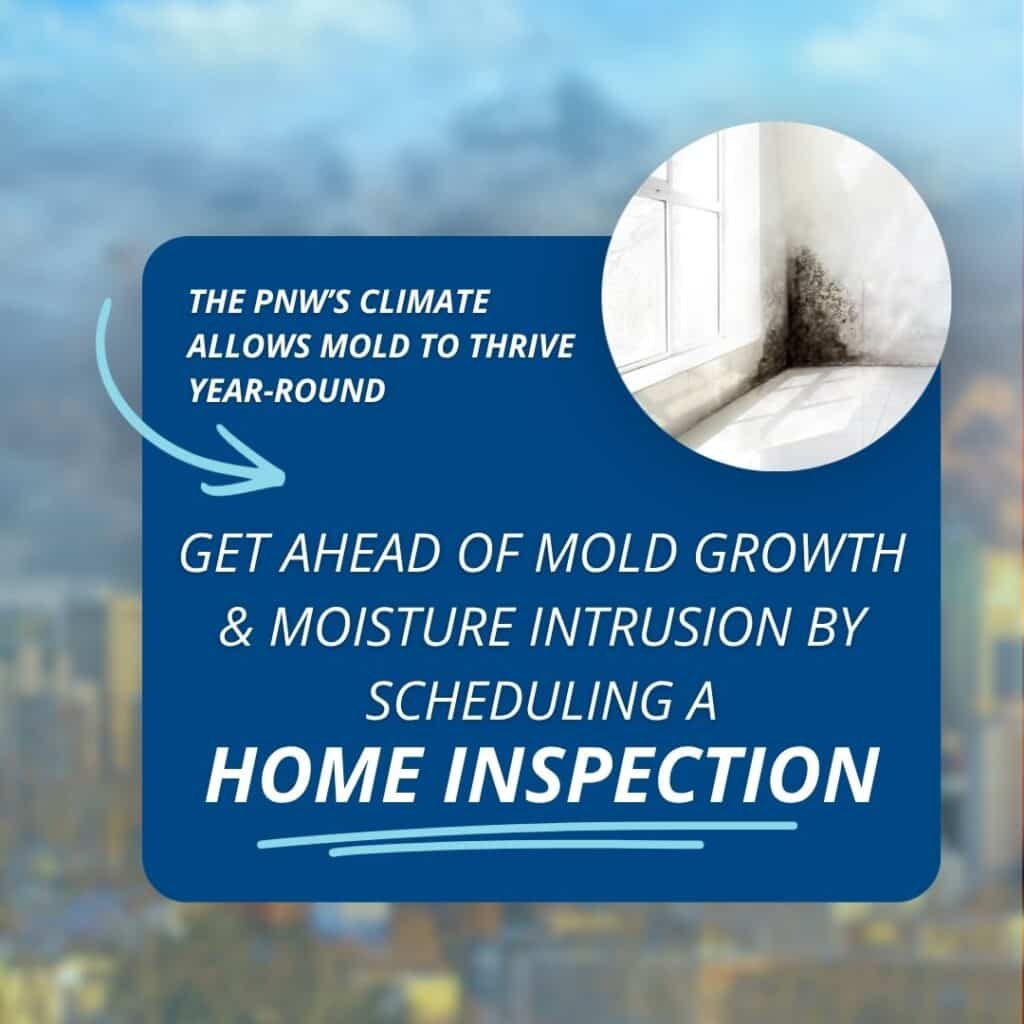
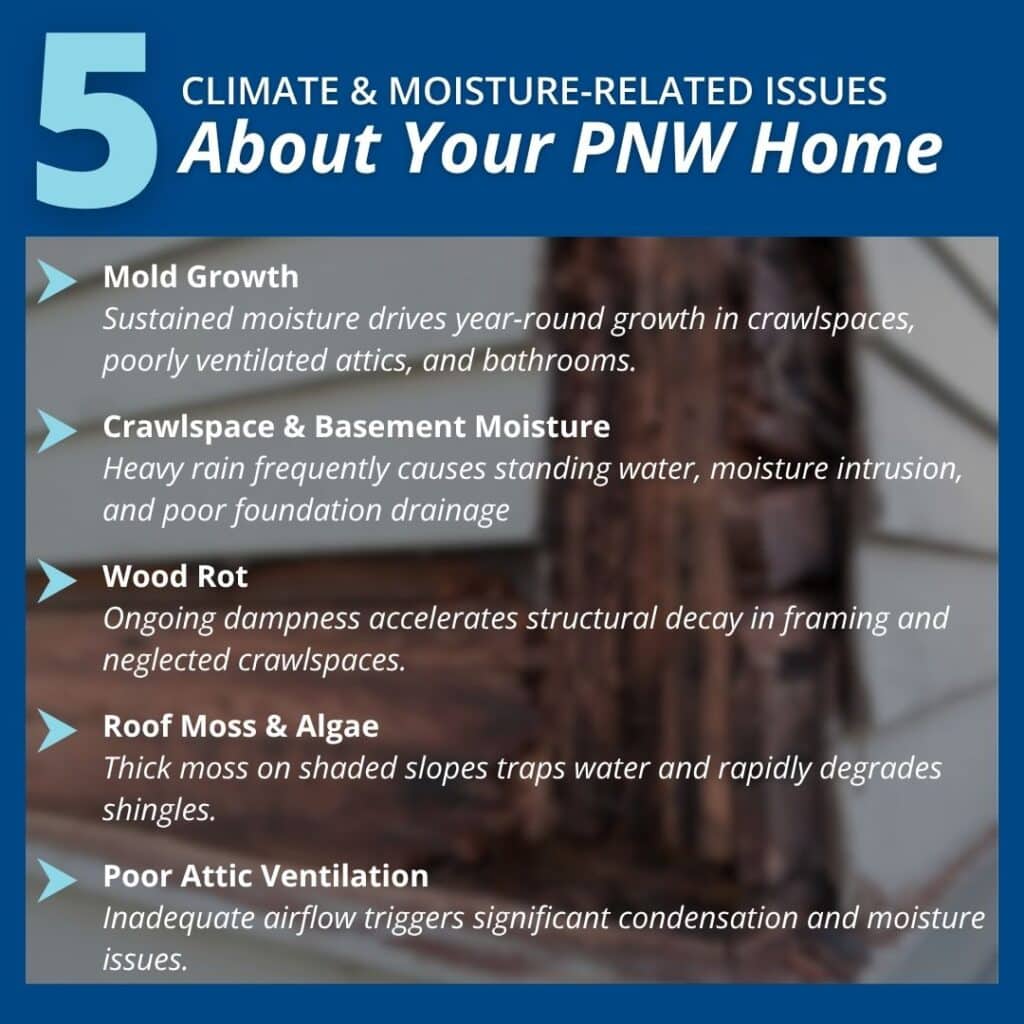
This climate does predictable and significant things to homes: it promotes moss and algae growth on roofing, drives moisture into crawlspaces and basements, accelerates wood rot and decay, and creates year-round conditions where mold can thrive if a home’s moisture management systems are inadequate.
Aging Infrastructure
In addition to climate factors, many PNW homes were built during mid-century construction booms that used materials and methods now known to carry higher risk, including older sewer pipe materials, knob-and-tube or aluminum wiring, and aging HVAC systems.
Portland-area homes, in particular, frequently have underground oil tanks from heating conversions decades ago, and clay or Orangeburg sewer lines that are far past their service life. A home inspection in this region involves all the standard components, and then some.
What a Pacific Northwest Home Inspection Covers
A full home inspection in Washington or Oregon follows the state’s Standards of Practice, which typically include the following.
Structural Components
Foundation, visible framing, and support systems. Inspectors pay particular attention to crawlspaces and basements for moisture intrusion, standing water, wood rot, and inadequate ventilation.
The combination of wet weather and improperly maintained crawlspaces creates ideal conditions for mold, pest damage, and structural decay.
Roofing
Material condition, age, flashing, drainage, and structural integrity from inside the attic. PNW inspectors know to look specifically for moss and algae growth, which is ubiquitous in the region and significantly accelerates shingle degradation when left untreated. Gutters are assessed for proper clearing and downspout routing.
Exterior
Siding condition, grading, and drainage patterns. Water that pools near the foundation or runs toward the house rather than away is a significant finding. Inspectors assess whether the exterior systems are moving water away from the structure effectively.
Plumbing
Visible pipe types, connections, water heater, drainage function. Older PNW homes commonly have galvanized steel pipe (which corrodes from the inside out and restricts flow as it ages), polybutylene (associated with failure and insurance issues), or original cast iron drains.
Electrical
Panel condition and type, visible wiring, outlets, and safety components. Federal Pacific and Zinsco panels, associated with elevated failure rates, are commonly found in mid-century Pacific Northwest homes and are flagged by inspectors for specialist evaluation.
HVAC
Age, condition, and function of heating and cooling systems. Many older PNW homes heat with forced air, baseboard electric, or older gas systems. Heat pump efficiency and ductwork condition are inspected.
Insulation and Ventilation
Attic and crawlspace insulation levels, ventilation adequacy, and any signs of condensation or moisture from inadequate airflow. Poor attic ventilation is a significant source of moisture problems in PNW homes.
PNW-Specific Issues That Come Up Most Often
Radon
Radon is a naturally occurring, odorless, radioactive gas that seeps up from the soil. The Pacific Northwest, including Clark County in Washington and many Oregon counties, has elevated radon levels that make testing strongly advisable. Inspectors routinely recommend a radon test, particularly in homes with basements.
If levels are elevated, a mitigation system can be installed and is often negotiable between buyer and seller.
Moisture and Crawlspace Problems
Water management is the dominant concern in a PNW inspection. Inspectors check crawlspaces carefully for standing water, wood rot, inadequate vapor barriers, pest activity, and mold. Drainage around the foundation is evaluated.
Homes with negative grading or improperly directed downspouts frequently have recurring moisture problems that show up in the crawlspace long before they are obvious elsewhere.
Roof Moss and Wear
Moss grows vigorously on Pacific Northwest roofs, particularly on the north-facing slopes that receive minimal sun. Thick moss growth holds moisture against shingles, accelerating degradation and reducing effective roof life. Inspectors note moss presence and density, the condition of underlying shingles, and whether any granule loss or shingle lifting has occurred.
Older Sewer Lines
In Portland, older Seattle neighborhoods, and comparable cities throughout the region, sewer lines installed in clay tile or Orangeburg pipe (a bituminized fiber material used in the mid-century) are extremely common. These materials are highly susceptible to tree root intrusion and structural collapse.
A sewer scope inspection is a camera-based inspection of the sewer line from the cleanout to the main. It is not part of a standard home inspection, but PNW buyers are almost always advised to add it for older homes.
Underground Oil Tanks
Prior to natural gas becoming widely available, many Portland-area homes and similar Pacific Northwest properties were heated with oil. When conversions occurred, buried oil storage tanks were often left in place and abandoned.
These tanks frequently leak, creating soil and groundwater contamination that is expensive to remediate and creates liability issues. Inspectors flag conditions suggesting past oil heat use, and buyers are advised to investigate further with a tank locating service.
Mold
The sustained moisture and mild temperatures of the Pacific Northwest create favorable conditions for mold growth when a home’s ventilation or moisture management is inadequate. Mold findings in crawlspaces, attics with inadequate ventilation, and bathrooms without proper exhaust are common in PNW inspection reports.
Add-On Inspections Worth Considering
A full home inspection is a visual examination. In the Pacific Northwest, several specialist add-on inspections are commonly recommended depending on the property:
- Radon test: Strongly recommended for homes with basements or in counties with elevated readings
- Sewer scope: Recommended for homes more than 30 years old or with mature trees near sewer lines
- Oil tank sweep: Recommended for homes built before 1970 in the Portland metro area and similar cities with documented tank histories
- Mold testing: Recommended when visible mold or suspect staining is present in the crawlspace or attic
- Structural pest inspection: Identifies wood-destroying organisms, including dry rot and termites, which are prevalent in the region’s moist conditions
Related Questions to Explore
- Do I need a home inspection in the Pacific Northwest? While not legally required, skipping an inspection in the PNW is a major financial risk. The damp climate, older housing stock, and regional issues like radon and aging sewer lines make a professional inspection essential for protecting your investment.
- How long does a Pacific Northwest home inspection take? Most inspections take 2 to 3 hours depending on the home’s size and condition, with crawlspaces, attics, and basements taking the most time. Buyers are highly encouraged to attend to see findings firsthand and ask questions.
- What is a sewer scope inspection? It is a camera inspection of the underground lateral line connecting the home to the municipal sewer main. It checks for roots, cracks, or blockages, making it a highly recommended add-on for older PNW homes.
- How is a PNW home inspection report delivered? Expect a digital, photo-filled report within 24 hours of the inspection. It organizes findings by system and severity, often including a built-in tool to easily generate repair requests for your real estate agent.
- What happens if a PNW home inspection finds problems? You can use the report to negotiate repairs, price reductions, or seller credits. Depending on your contract and the local market conditions, you can also choose to walk away from the purchase or simply accept the property as-is.
Schedule Your Pacific Northwest Home Inspection
Buying a home is one of the largest financial decisions you will make, and the Pacific Northwest’s climate and housing stock make a thorough inspection even more important than in many other regions.
A qualified inspector gives you the information you need to buy confidently and plan for future maintenance.
Conclusion
The Washington Association of Building Inspectors and the International Association of Certified Home Inspectors both maintain licensing and certification standards that PNW inspectors are expected to meet.
Boggs Inspection Services provides residential home inspections with detailed digital reports. We know what to look for in Pacific Northwest homes and take the time to walk through every finding with you so you understand what you are looking at.
Learn about our full inspection services and contact us to schedule your inspection.